
When reading stops being passive

How to Teach Quantum Physics to Your Dog is a book that simplifies quantum mechanics… supposedly! So much so that you can teach superposition, entanglement and decoherence to your dog. So I tried it with George, our Westie.
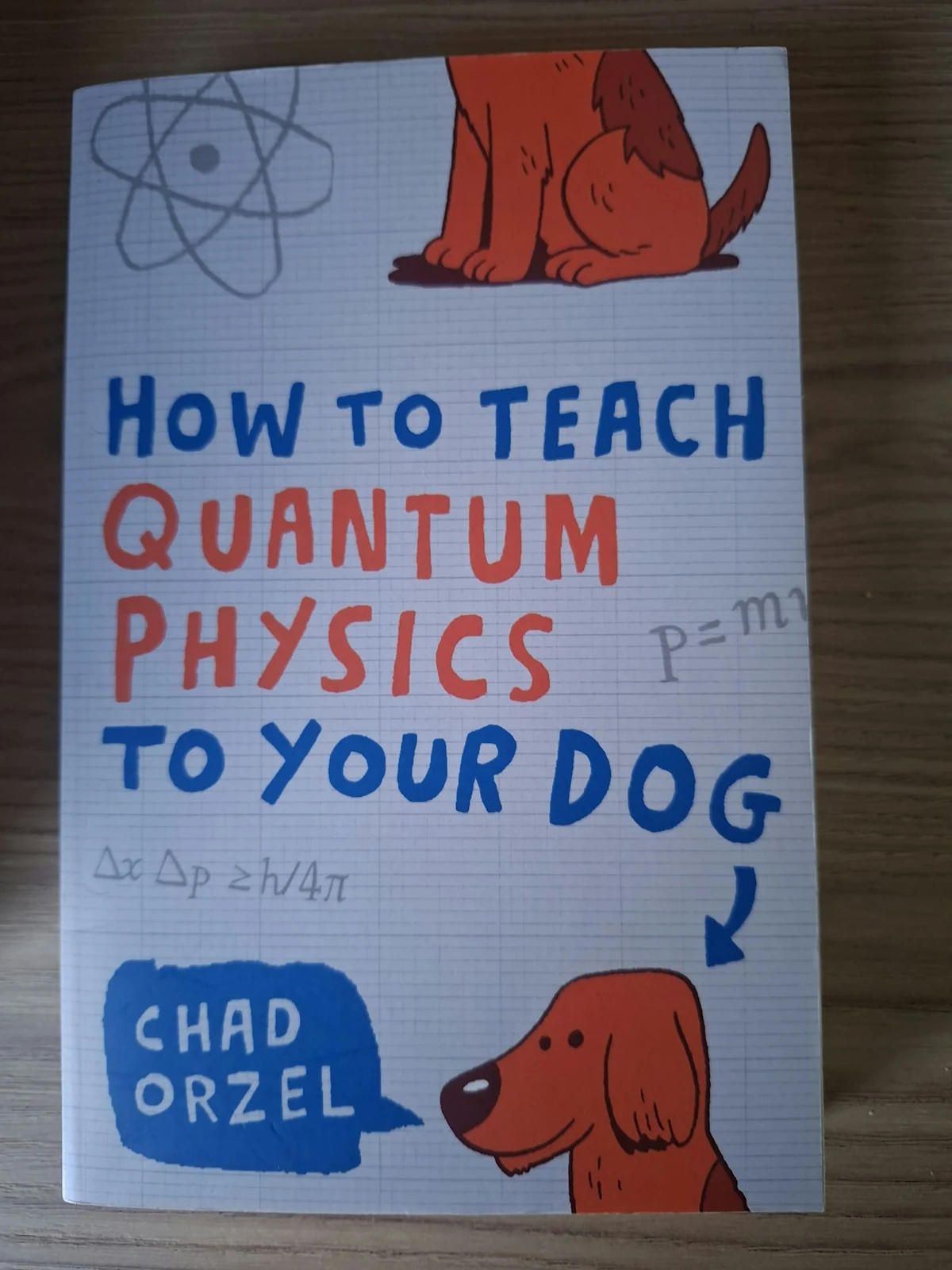
I must say, once he got over the terminology, he would not put the book down; he was like a dog with a bone. He really got his teeth into the Many-Worlds principle; he did not even paws for breath.
But really, the point was that the book was not simple at all, but that is where AI came in. A puzzling sentence could become a question, then an explanation, and then another question. We did not need to pretend we understood something before asking. Reading, asking AI questions and trying another explanation helped us understand a little more before moving on. This process worked a treat for both George and me, but, being honest, George progressed through it much faster than I did; he lapped it up.
Then came Penrose
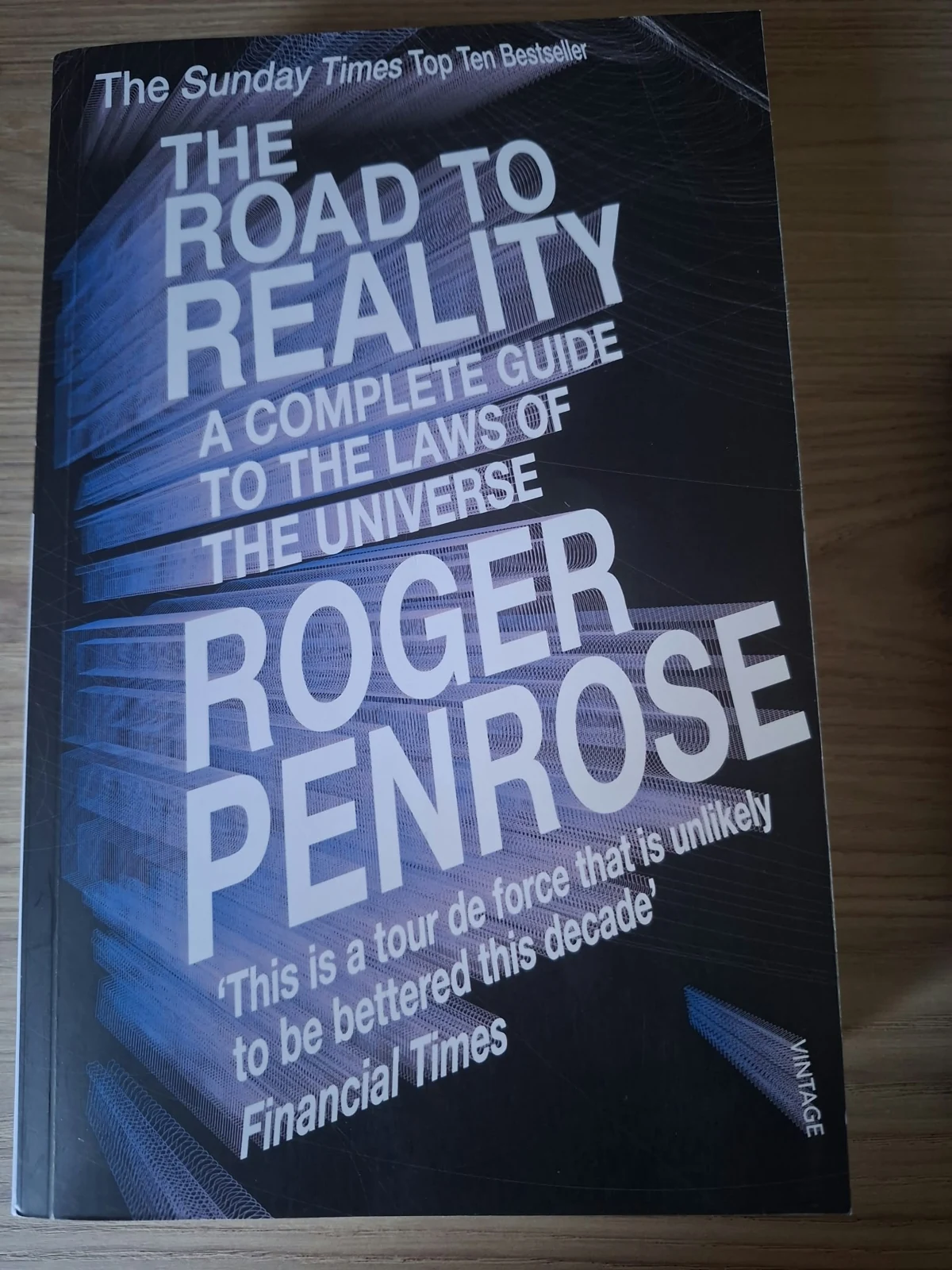
Some books are easy to read, supposedly like the above. Some require real concentration. And then there is Roger Penrose's The Road to Reality: 1,099 pages, 34 chapters and £35. It is in a league of its own when it comes to complexity for the non-trained reader. At that point, the purchase of the book, and the initial optimism of embarking on Chapter 1, starts to look suspiciously like poor judgement.
I bought it because I wanted to understand more about cosmology, quantum theory and the deeper structure of physics. The curiosity was genuine. The comprehension very much less so.
Reading became a conversation
The difficulty was not simply that the material was complicated. Traditional reading is largely one-way. The author explains. You read. If you do not understand something, the book does not notice. It certainly does not stop and say: 'That bit looked painful. Shall we try it another way?'
Once Lugs2 became part of the process, I could stop wherever I got stuck and ask questions immediately. Not so much 'Teach me complex number notation' as: 'What on earth does this paragraph mean?' Then: why does that matter, can you explain it another way, what assumption is being made, who disagrees, can you give me an analogy, and have I actually understood it or am I just nodding because the words sound convincing?
The process settled into a simple rhythm: Read → Stop → Ask → Reframe → Return to the source. Sometimes one explanation was enough. Sometimes it took three. Sometimes an analogy helped. Sometimes the analogy created an entirely new misunderstanding, which was less helpful but still educational.
The useful AI contribution was not simply explanation. It was re-explanation: translate dense prose & mathematical formulas, offer another analogy, compare interpretations, identify the prerequisite idea I had missed, connect the section to earlier discussion and challenge my understanding.
There was an important catch. AI can make something sound understandable even when the explanation is too simplified. It can smooth over disagreement, produce an elegant analogy that breaks later, or simply be wrong. So the source remained important.
The workflow was not Book → AI → truth. It was Source → question → explanation → challenge → return to source.
The outcome was not that I became a physicist. Professor Brian Cox has not yet called. Penrose remains in a different mathematics league to me, although that is probably true for about 99.9999% of the population. Difficult material became more approachable, allowing me to stay with ideas for longer. The questions became deeper, and the learning became more enjoyable.
Chapter 15 — moral victory
I didn't make it all the way through The Road to Reality, but our conversations got me substantially further than I would have managed on my own. It was Chapter 15 of 34 before the book quietly found its way back onto the shelf. That counts as a moral victory!

And George? He's continued his education and is currently trying to find Schrödinger's cat.
Transferable lesson
Do not just ask for the answer. Stay in conversation with the thing you are trying to understand: read some, ask, challenge, return to the source, repeat.
Human + AI
Boundaries
Not a shortcut to expertise.
Not a substitute for authoritative sources.
Not evidence that every AI explanation is correct.
Copyright/image use must remain within approved rights limits.