From a sketch to a shared world
Some collaborations are serious. Some are practical. And some begin with a six-year-old grandson drawing a very strange creature and Grandad wondering: 'Can we make this real?'
That was the charm of Snolphin and his mates. There was no polished brief and no grand objective. There was a drawing, a conversation about what the creature was supposed to be, an upload, an AI image, Grandad and grandson laughing at what came back — and then, inevitably, another creature.
The drawings mattered because they gave the whole thing a human centre. Long necks, tiny legs, spirals, tails, extra heads, one eye, odd foods, strange planets and gloriously illogical rules all arrived first on paper. Nanny mostly looked on with the entirely reasonable expression of someone thinking: how on earth did they do that?
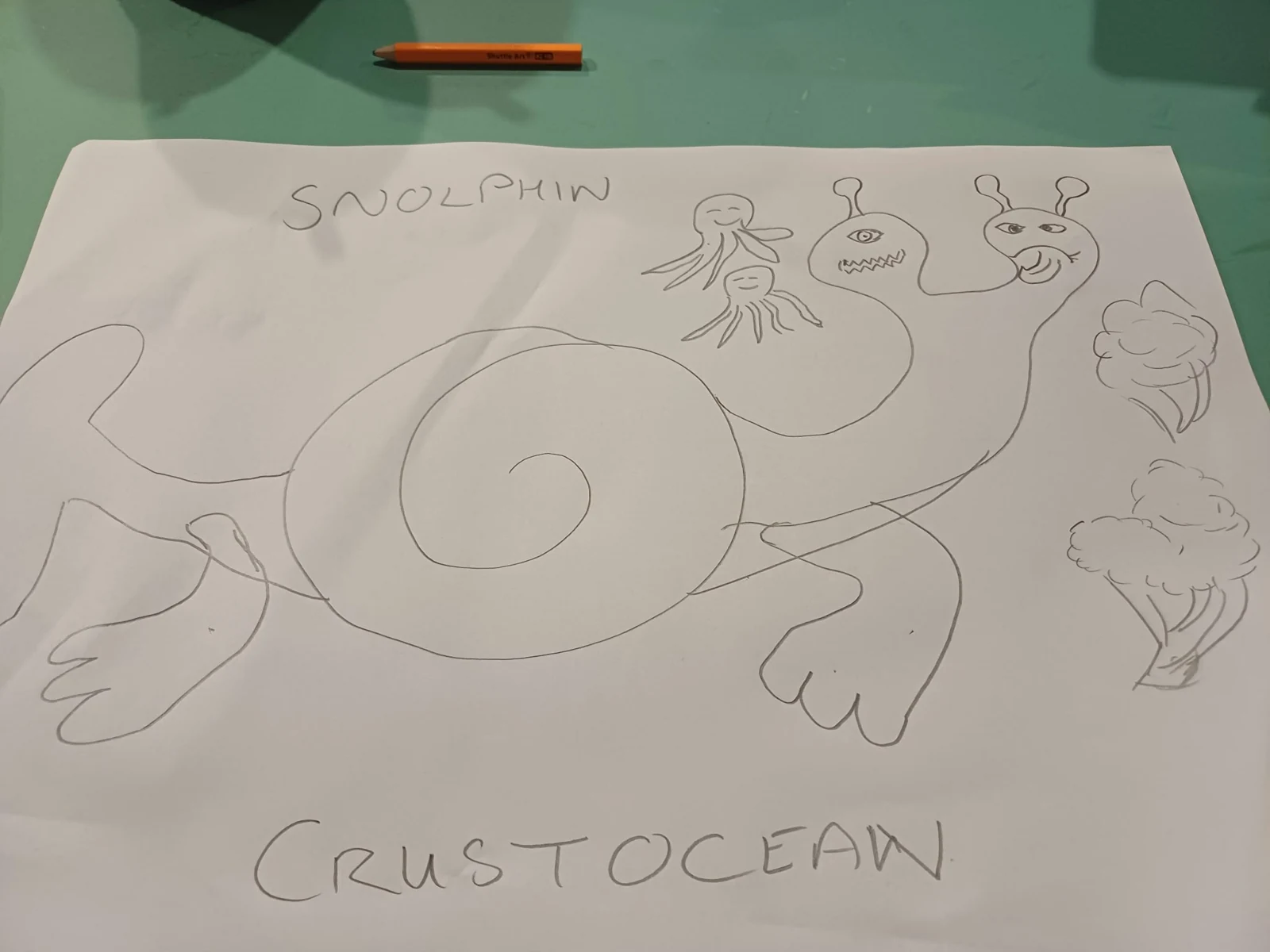
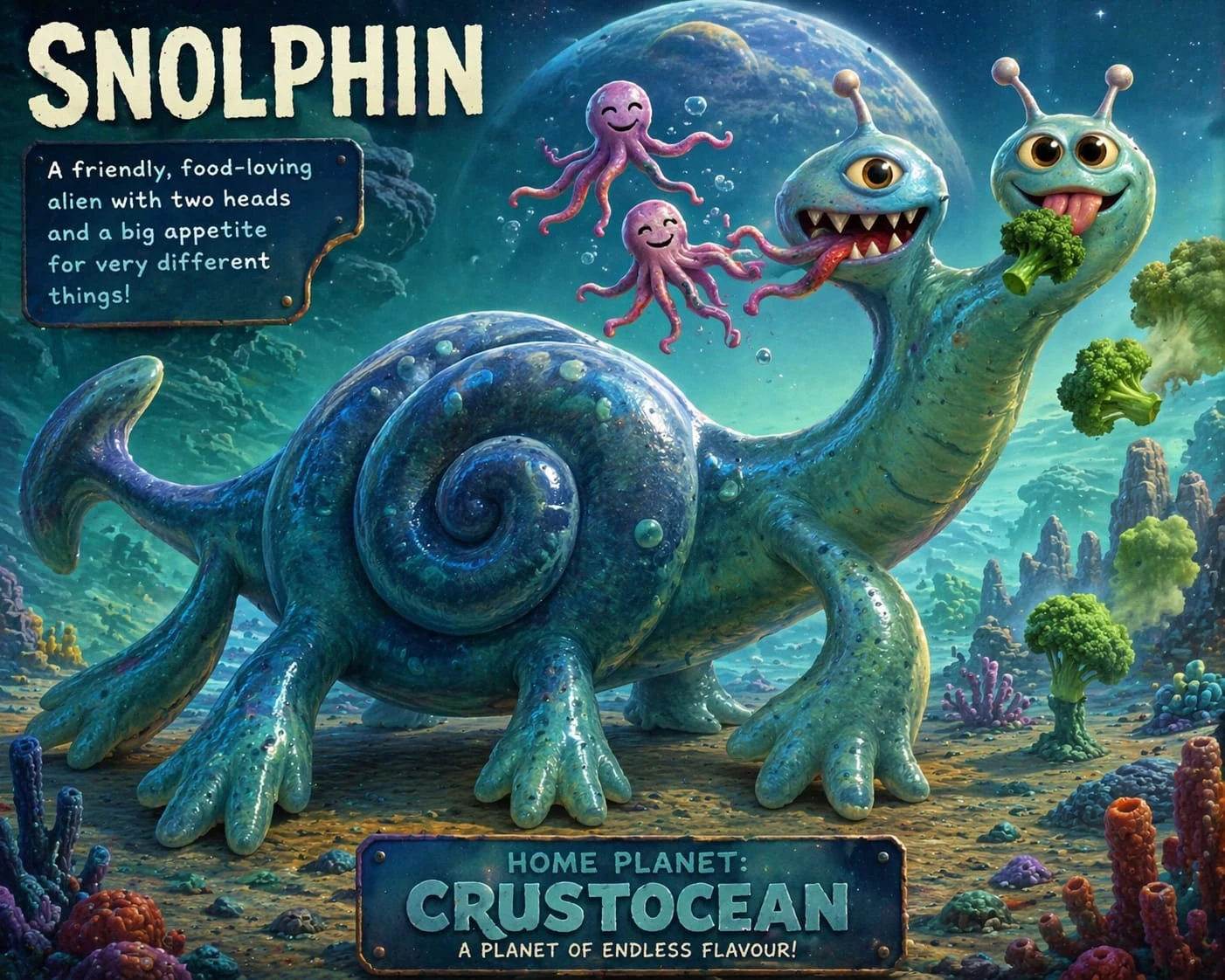
The first drawing led to our first generated creature.
What came back was part of the game
The process was wonderfully simple. Grandson drew, Grandad asked questions, and together we worked out the creature’s name, what it ate, where it lived, which features had to stay and what would make it funnier or stranger. AI then turned that rough idea into something vivid enough to point at — usually followed by a laugh, a correction or a demand for another one.
The result was never treated as the answer. It was another move in the game. We laughed at bits, kept what we liked, changed what we did not, and then moved on to the next creature. The fun was as much in the reaction as in the image.
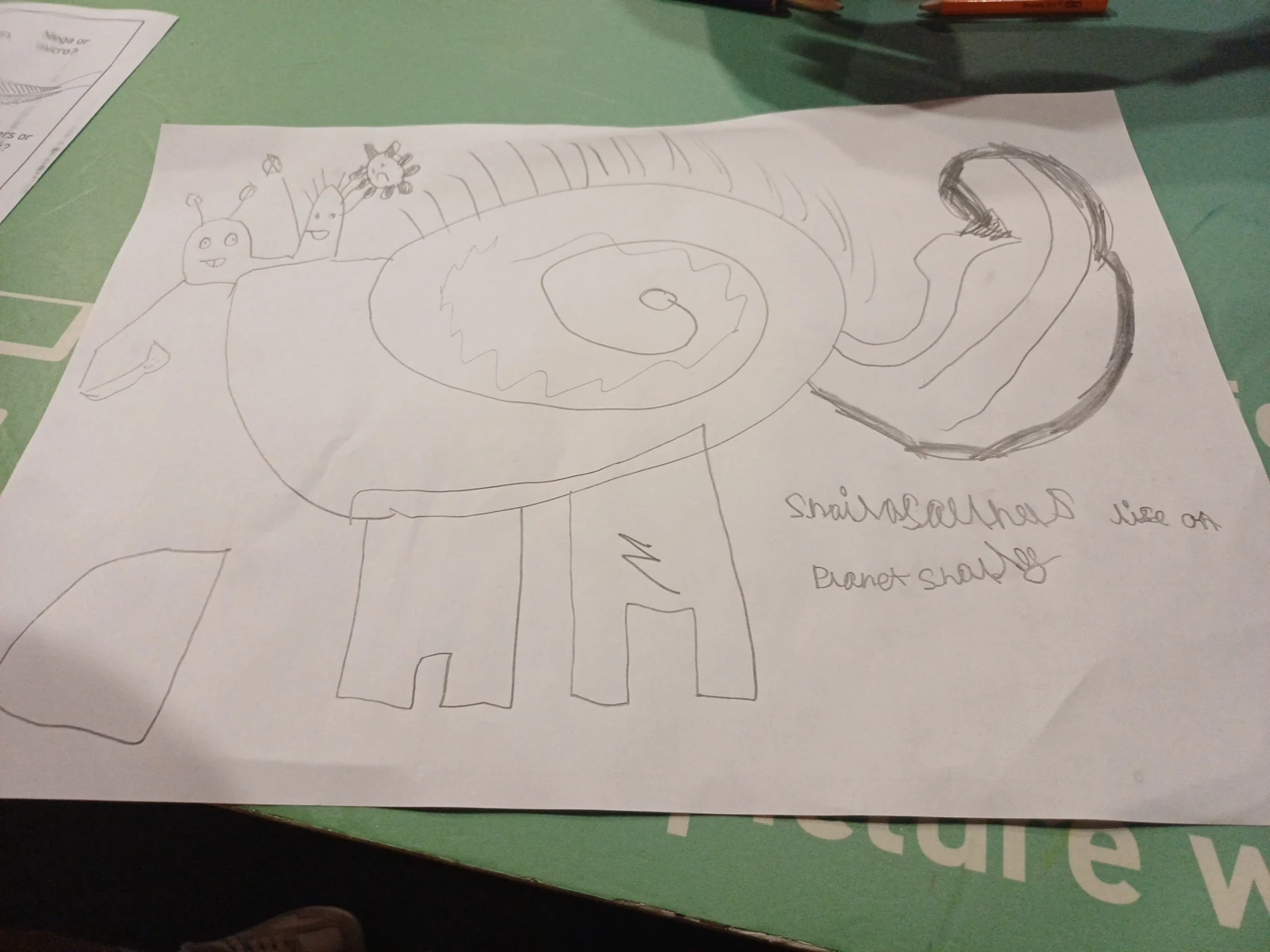
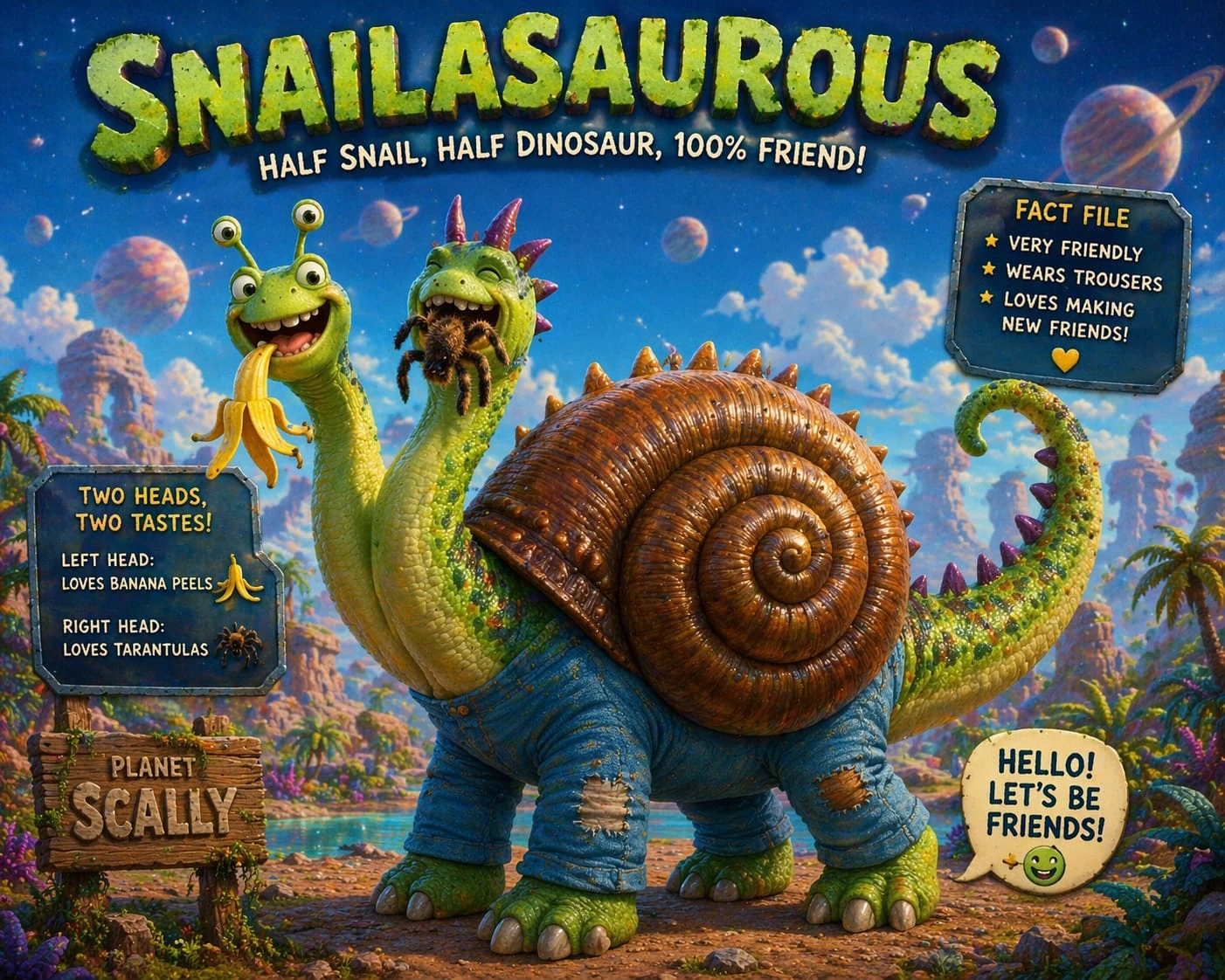
A second sketch and conversation produced another creature. The process had become repeatable.
Very quickly, one creature became several: Snolphin, Snailasaurous, Long Jaws, DoYouThinkASaurous and others. That is what makes the case interesting. It is not an image gallery; it is a record of shared imagination becoming visible.
The creative loop
- Draw
- Talk
- Add features
- Prompt
- Laugh
- Refine
- Create another
That loop is probably more useful than any perfect prompt. The child does not need to know how image generation works. They need an idea, permission to be ridiculous, and the ability to react to what comes back.
More than a single image
A creature design can become a little world. A little world can become a story. A story could become a bedtime book. Whether or not that ever happens, the collaboration has already made something more valuable than a polished picture: a shared memory between Grandad, grandson and Nanny, and a small family artefact we can still laugh about.
AI’s contribution was speed, iteration and visualisation. The human contribution was everything that made the creatures worth creating in the first place: imagination, humour, taste, relationships and the delight of seeing an idea become real enough to argue about.
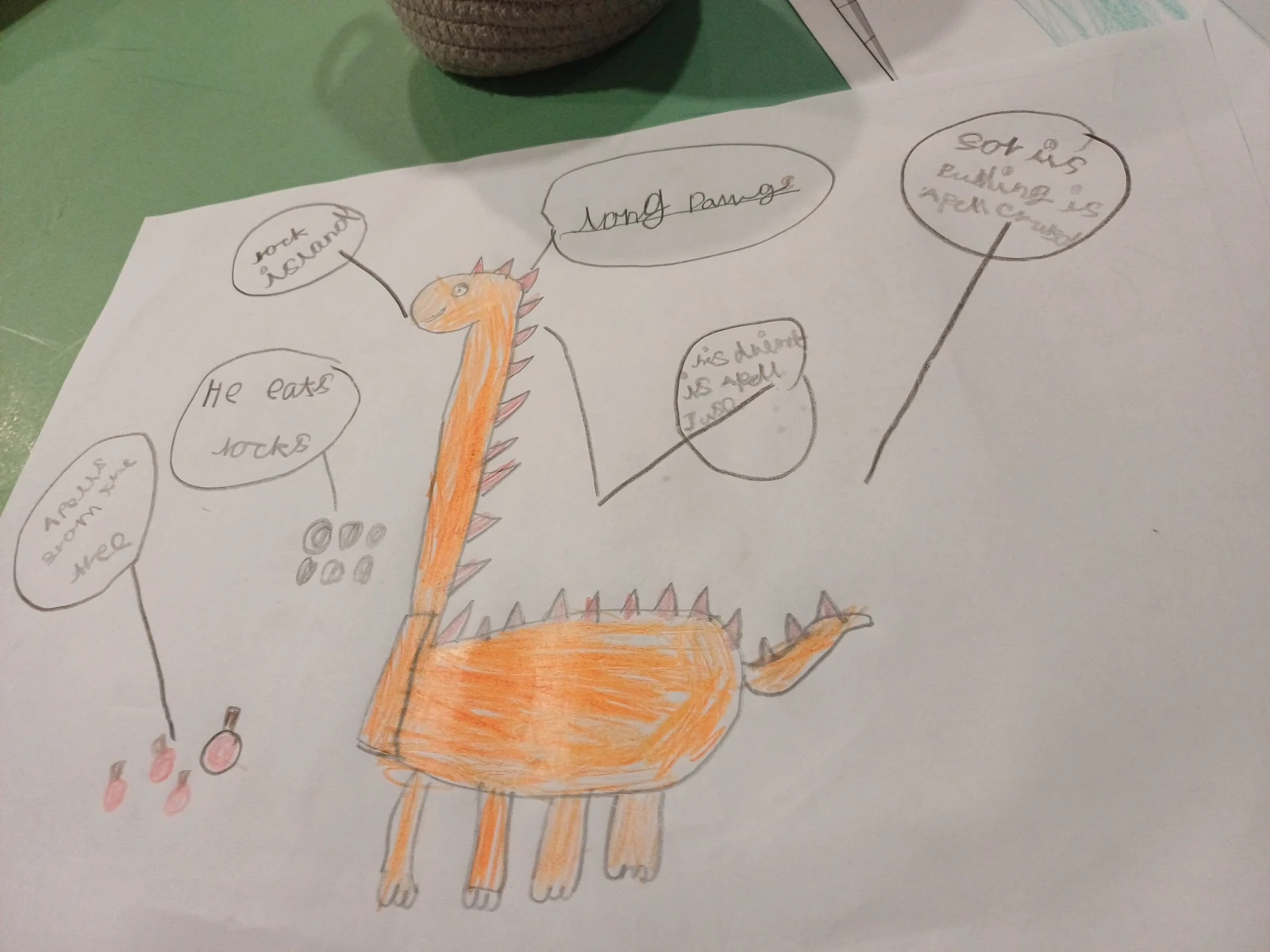
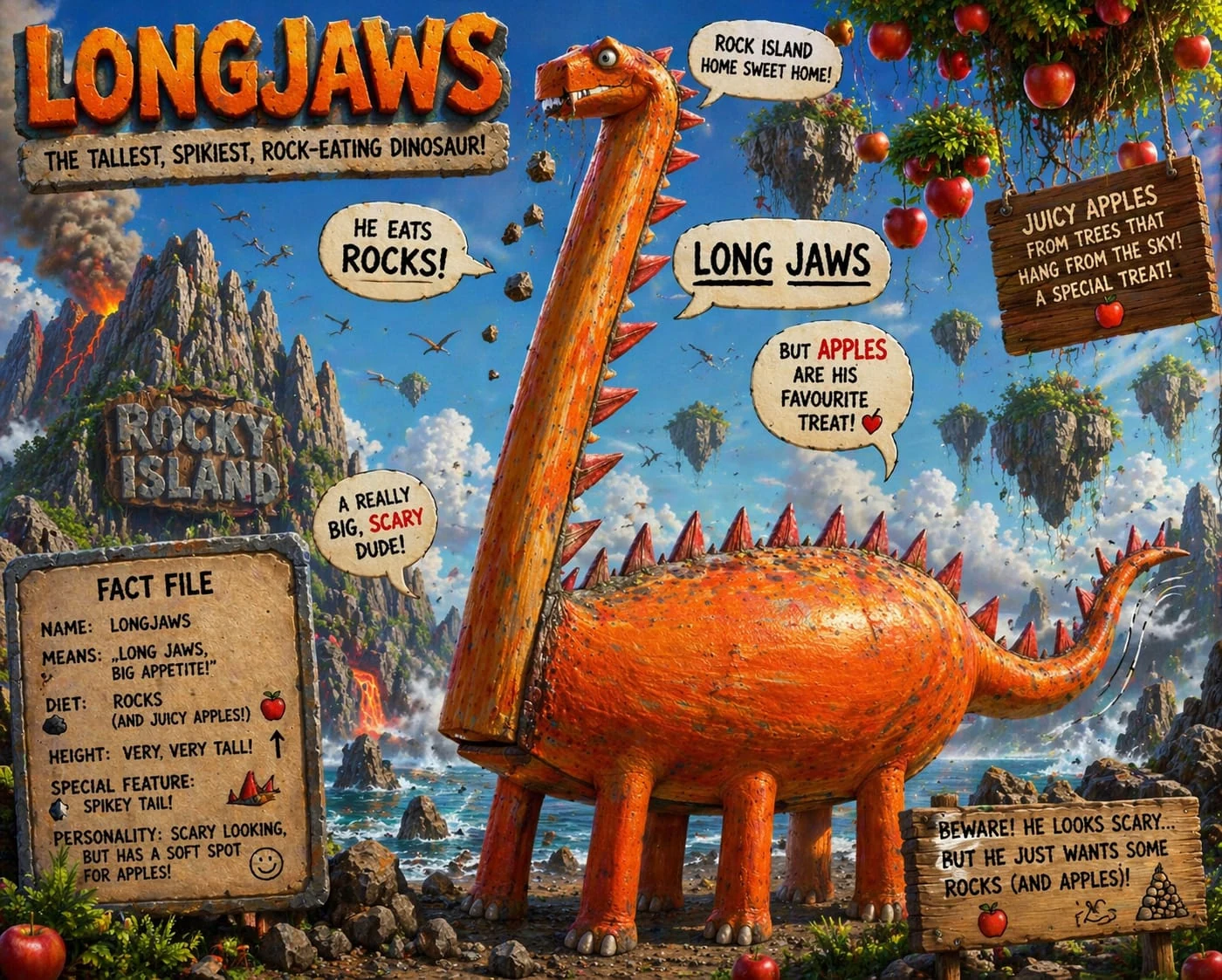
Another drawing, another result — the characters were led by the child's ideas.
Not everything needs a serious objective
This is also a useful reminder that creative collaboration with AI does not need to begin with a serious problem. Sometimes the best starting point is simply: 'What if we made this funny thing together?' That is enough.
In that sense, Snolphin and his mates sit at the most human end of the Grey Matters Create mode. They are playful, immediate and low-stakes — but they show how quickly simple co-creation can become meaningful. A year later, grandson is seven and the creative centre of gravity has moved on to Pokémon, which feels entirely appropriate.
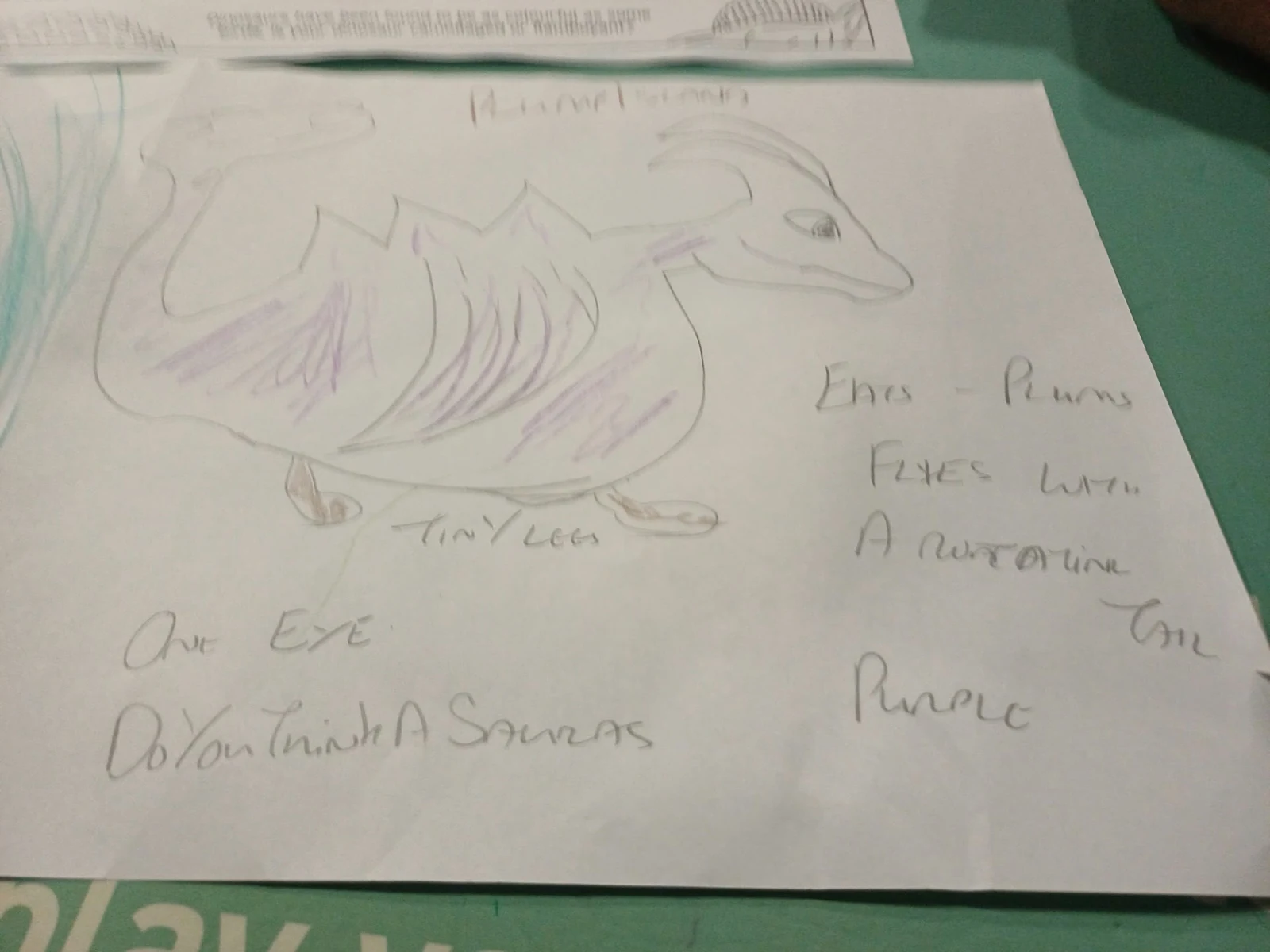
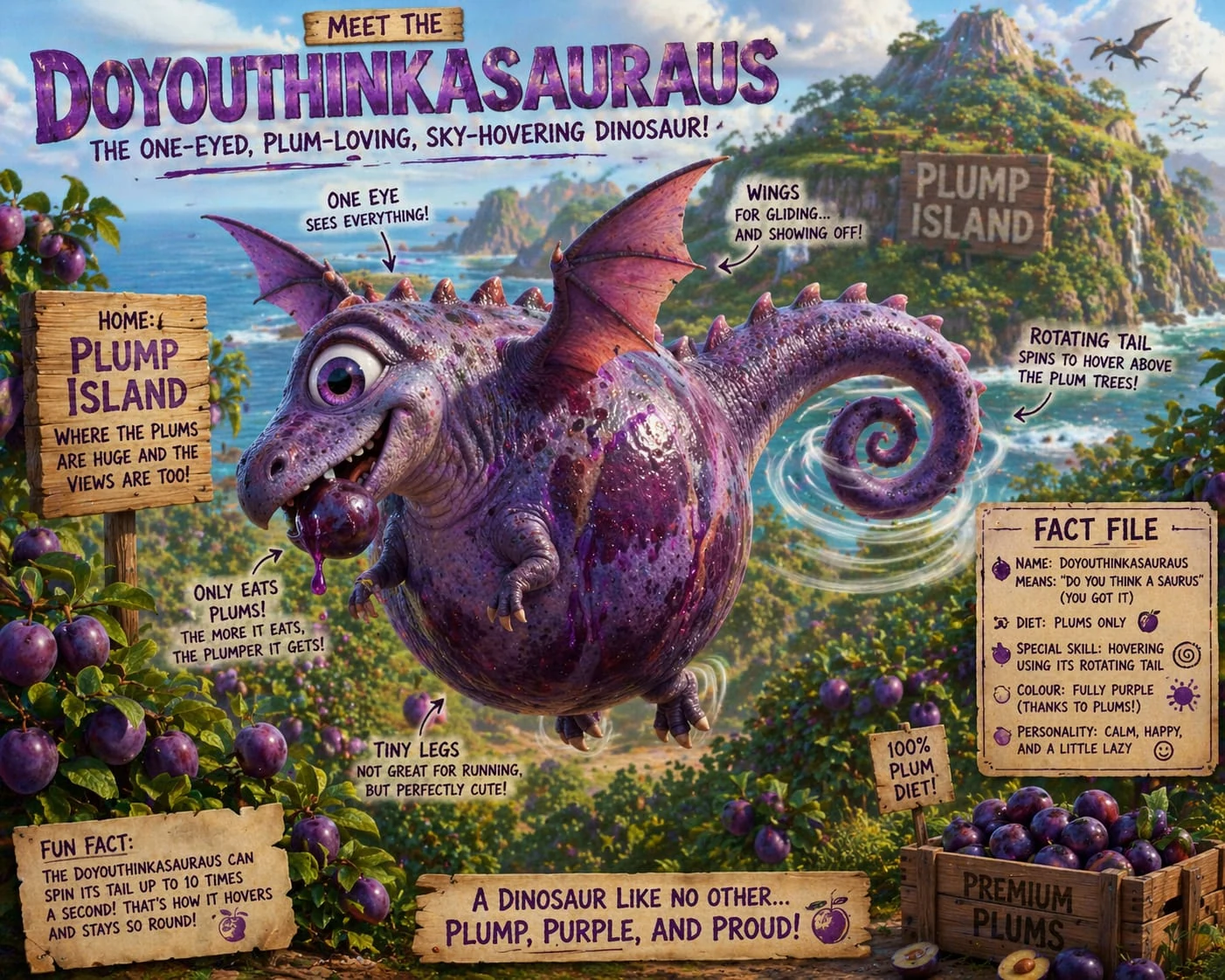
By the fourth drawing and response, a small creature-world was taking shape.
Who knows where that goes next. Perhaps the next challenge is to create the Pokémon card that finally beats the world-record price. If that ever happens, Snolphin and his mates can reasonably claim to have been the training ground.
Transferable lesson
AI can help turn family imagination into something visible very quickly. That is useful not because the images are technically impressive, but because they give people something to point at, laugh at, change, extend and remember together.
Start with a sketch. Talk about what it is. Add the strange details. Turn the conversation into a prompt. React to the result. Change it. Make another one. The point is not perfection. It is shared play becoming a tangible artefact.
Human + AI
| Human | AI |
|---|---|
| Imagination · play · drawing · humour · taste · deciding what feels right · the relationship itself | Visualisation · rapid iteration · turning a rough sketch and conversation into something vivid · enabling many versions quickly |
Boundaries
Keep the family treatment warm and non-exploitative; the point is shared creation, not exposure.
Use only the original family drawings and generated outputs already selected for public use.
Do not imply that AI supplied the imagination.
Do not turn the page into a technical demonstration of image generation.
Avoid adding generic decorative imagery — the authentic drawings and results are enough.