
Define the outcome
What would a good result actually look like?
Human-led. AI-enabled. Start with what matters.
Explore · Plan
A useful plan begins with a real goal, not a magnificent spreadsheet.
Start with something you actually want to do. It might be learning a skill, organising a weekend, planning a holiday or tackling a larger project. The scale changes, but the basic job stays the same: work out what matters, what the constraints are and what you can realistically do next.
Try a planning prompt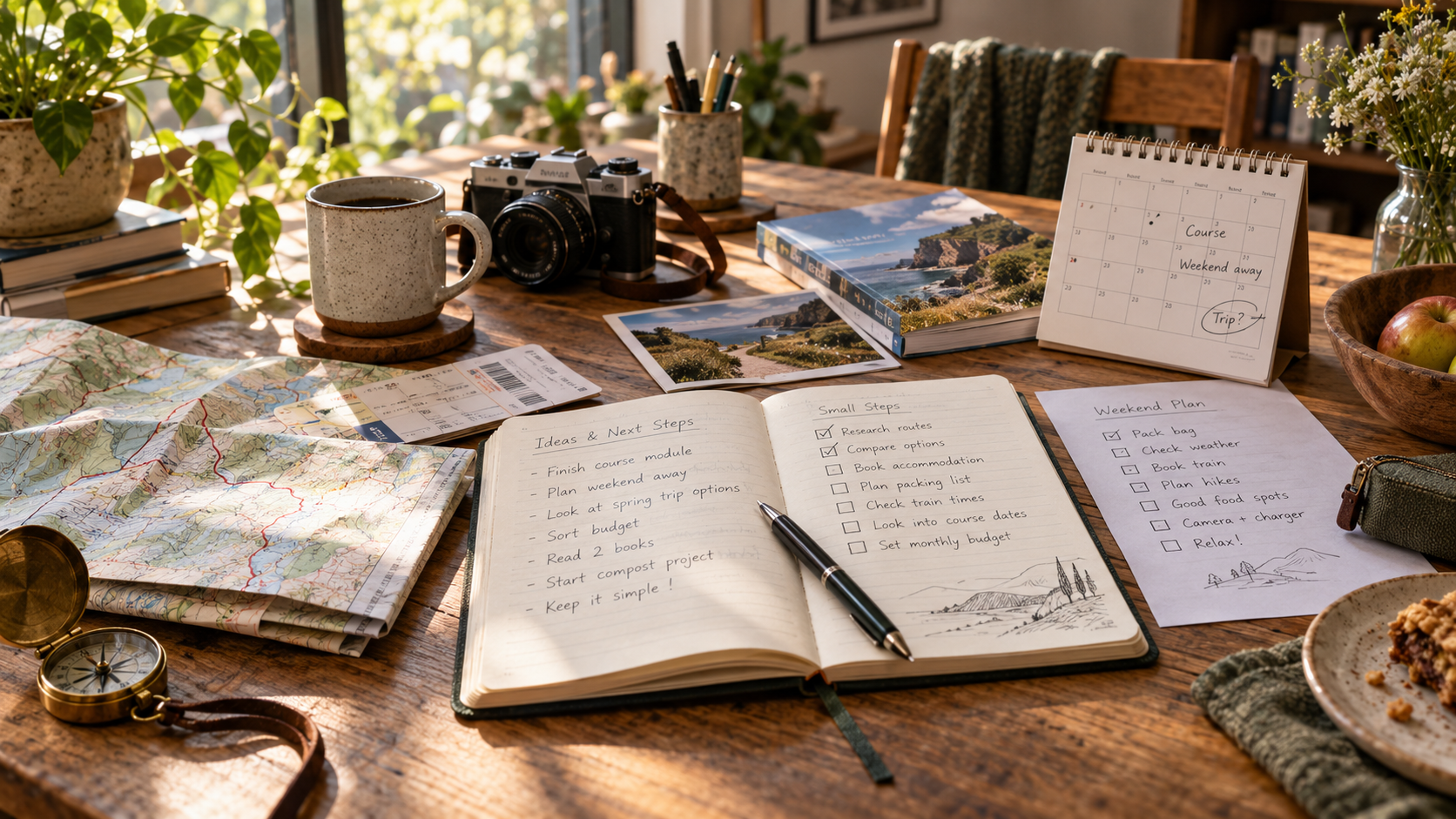
What would a good result actually look like?
Time, money, preferences, practical limits and anything you cannot ignore.
Turn the goal into sensible steps, then check whether the plan survives real life.
What this could help with
Potential uses range from a learning path or weekend plan to a home project, event, trip or longer-term piece of work. The same planning discipline scales with the problem rather than becoming a different method.
What transfers: Start with the outcome, expose the constraints and make the route practical enough to survive contact with real life.

Our example — how we used it
One of our early uses was a learning path around professional skills. Instead of disappearing into a pile of courses, articles and certifications, we could start with the capability we actually needed, find the gaps and choose sensible milestones.
The larger version was a three-island Hawaii trip: preferences, geography, logistics, activities and trade-offs. AI helped put the choices in order. We still had to choose the holiday — and occasionally work out where the Guinness was.
AI can help
AI can organise requirements, suggest sequences and propose questions you have not yet answered.
You still decide
You set the priorities, check the practical details and decide what is actually realistic. A plausible plan still has to survive contact with the real world.
Try it yourself
I want to plan [goal]. Before giving me a solution, help me clarify what I am trying to achieve, the important constraints, the choices I need to make and what information is missing. Then suggest a practical sequence of next steps. Keep it proportionate — do not make the plan more complicated than the problem.Adapt this prompt