
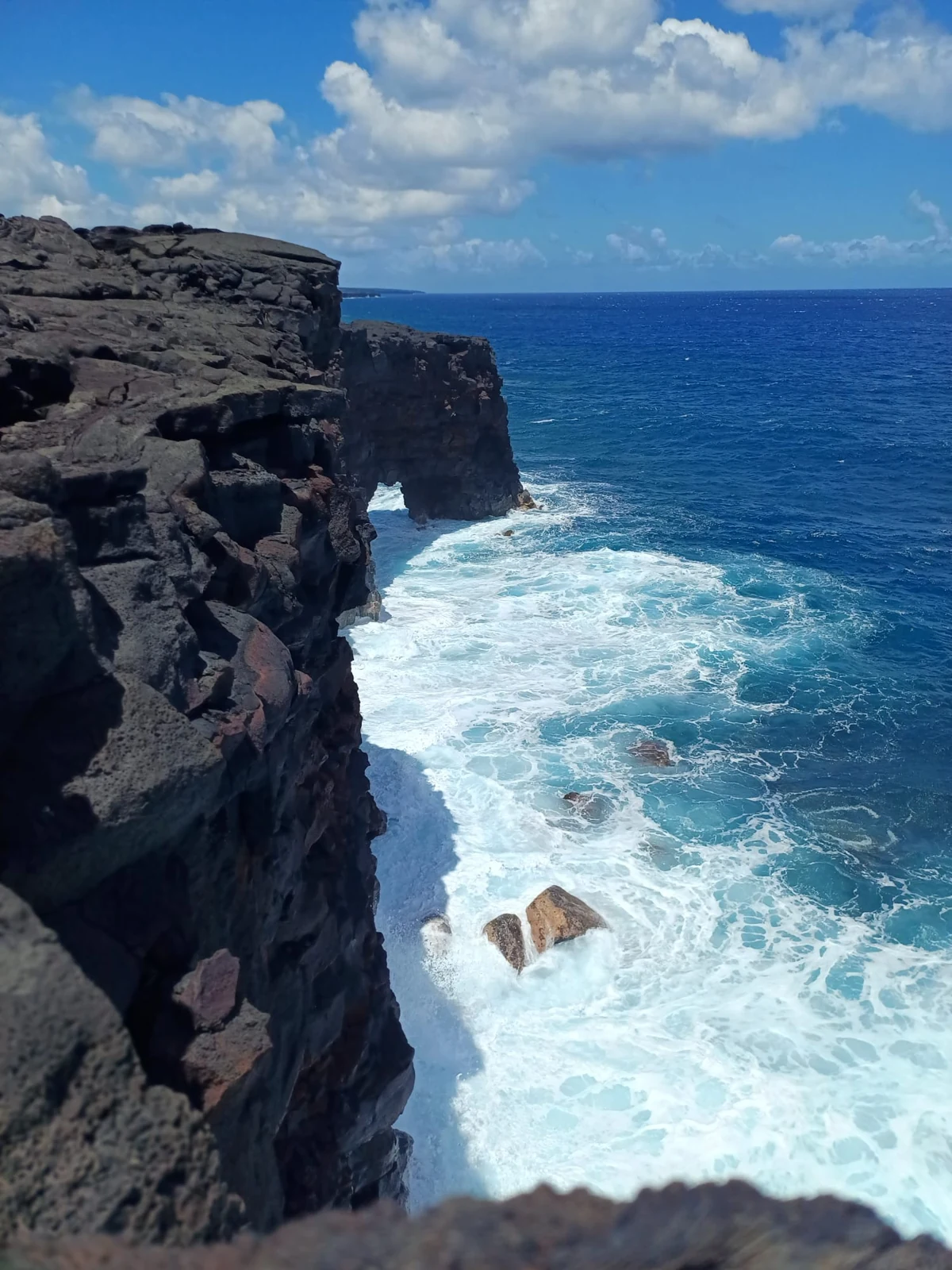
The plan came with us
The Hawaii Project began with almost no brief at all. “Hi Lugs2, do you fancy a trip to Hawaii?” Then: “OK, tell me a bit about it...” There was no route, no island list, no itinerary and no planning framework. Just curiosity. That is important because it shows how a substantial project can grow from a very ordinary conversational start. The structure came later, when the task earned it.
The initial conversation broadened into a three-week journey: San Diego → Maui → Big Island → Oʻahu → Los Angeles, with the Hawaiian section built around distinctive experiences rather than simply collecting destinations. The plan came to include Haleakalā, island exploration, Hawaiʻi Volcanoes National Park and Volcano House, Pearl Harbor, night-sky experiences, scenic drives, beaches, light hiking and deliberate chill time. Preparation was part of the holiday, not merely administration before it. One question led naturally to another: which islands, could we see volcanoes, what about Pearl Harbor, where could we experience the Milky Way, and how much downtime would make the trip feel relaxing and not too fraught?
The plan improved by becoming more specific to us, not more comprehensive. The hotel choice changed from Outrigger Waikiki to Halepuna, a calmer base for the final part of the journey. A repeat formal stargazing outing gave way to something quieter and more personal. Some ideas were changed or removed, rather than accumulated endlessly. The lesson was already becoming clear: try to strike the right balance between planned activity and chill-out time.
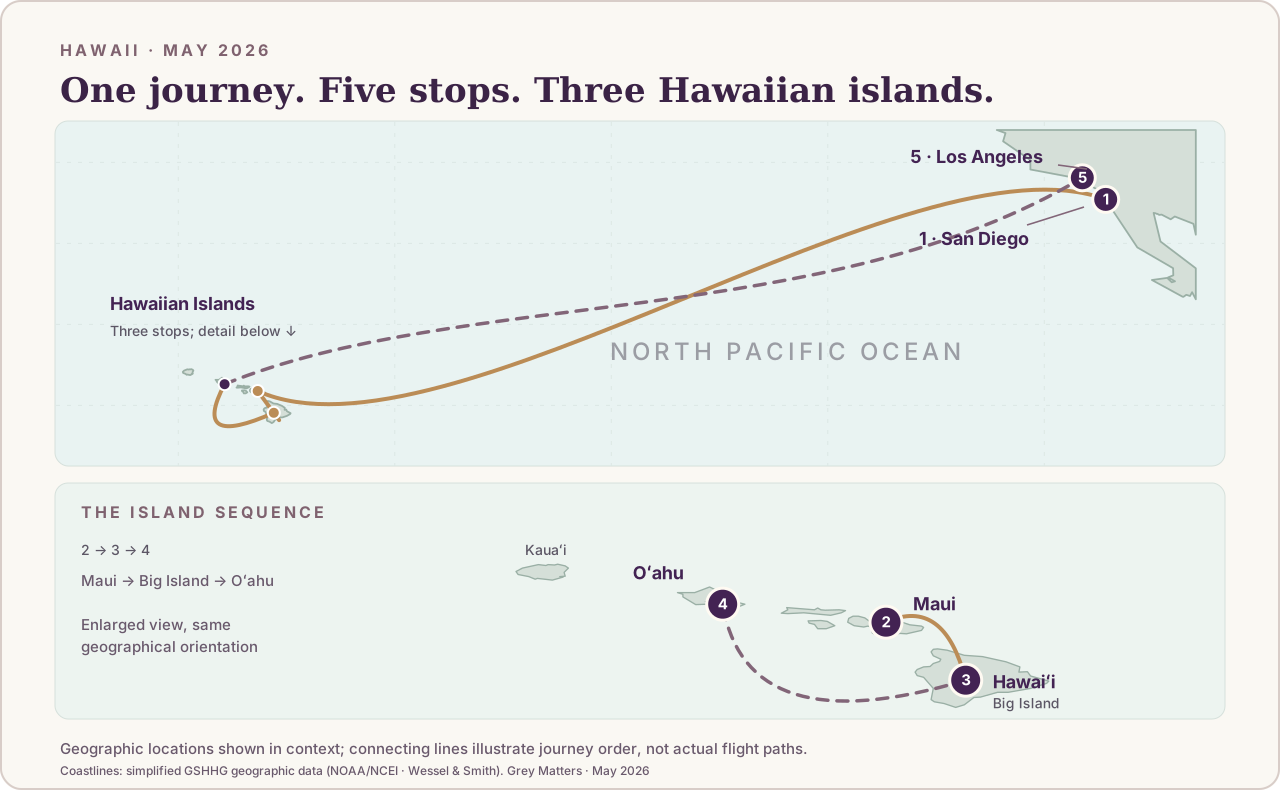
Swipe sideways to explore the full map; tap to enlarge.
From a conversation to a travelling plan
There was also a clear capability boundary in this project. AI could research destinations, compare options, sequence the route, remember decisions, reshape the plan and prepare the booking logic. But the human still had to book the flights, hotels, hire cars, tickets and activities, enter payment details and accept the consequences of those transactions. That boundary is worth showing because it captures where collaboration sat at the time: research → recommend → prepare, with the human carrying out the real-world action. Agentic AI is beginning to move that frontier, but approval and responsibility remain human questions.
Eventually the accumulated conversation became the Master Itinerary: flights, hotels, cars, activities, practical notes and free time pulled into one day-by-day guide. It became the daily “bible” rather than a document that stayed at home. But it was not the end of the conversation, and the January working itinerary was not treated as sacred. Later choices superseded parts of that first plan. Once travel began, the questions changed from “which island?” to “what do we do from here, today?” The context travelled too: our route, preferences, previous choices, energy on the day and what we actually wanted from the holiday.
A representative working day from the sanitised itinerary was Kona to Volcano: check out, allow time for the drive and a lunch stop, make Volcano House the base, and leave space for shorter walks or a crater-view sunset depending on weather and energy. Practical notes covered warmer clothing and the park-entry requirement. The value was in having a usable plan that still left room for the real day.
When the real world joined in
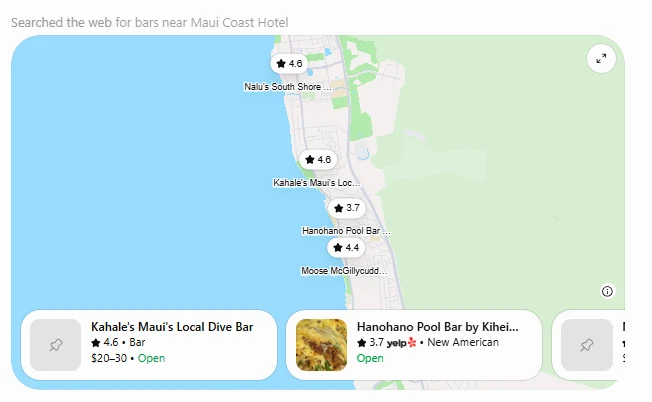
San Diego provided an early practical test when mobile data stopped working. The conversation moved into checking network registration and correcting an APN setting until the eSIM worked. Later, daily adjustments, weather, alternatives and local questions became part of the same continuing exchange. There was even the occasional vital matter of finding Guinness near Kīhei. That genuine search was a small but revealing example of a static plan becoming contextual and local.
Weather and cloud changed what was sensible and possible, including night-sky plans. Then came an earthquake we had definitely not included in the itinerary. Near Kona, the discussion shifted to aftershocks, tsunami information and whether the following day’s Volcano House plan remained appropriate. AI helped organise questions and relevant checks, while local information, conditions and human judgement governed the real choices. A useful plan is one that remains useful when reality changes daily.
The islands became a living classroom
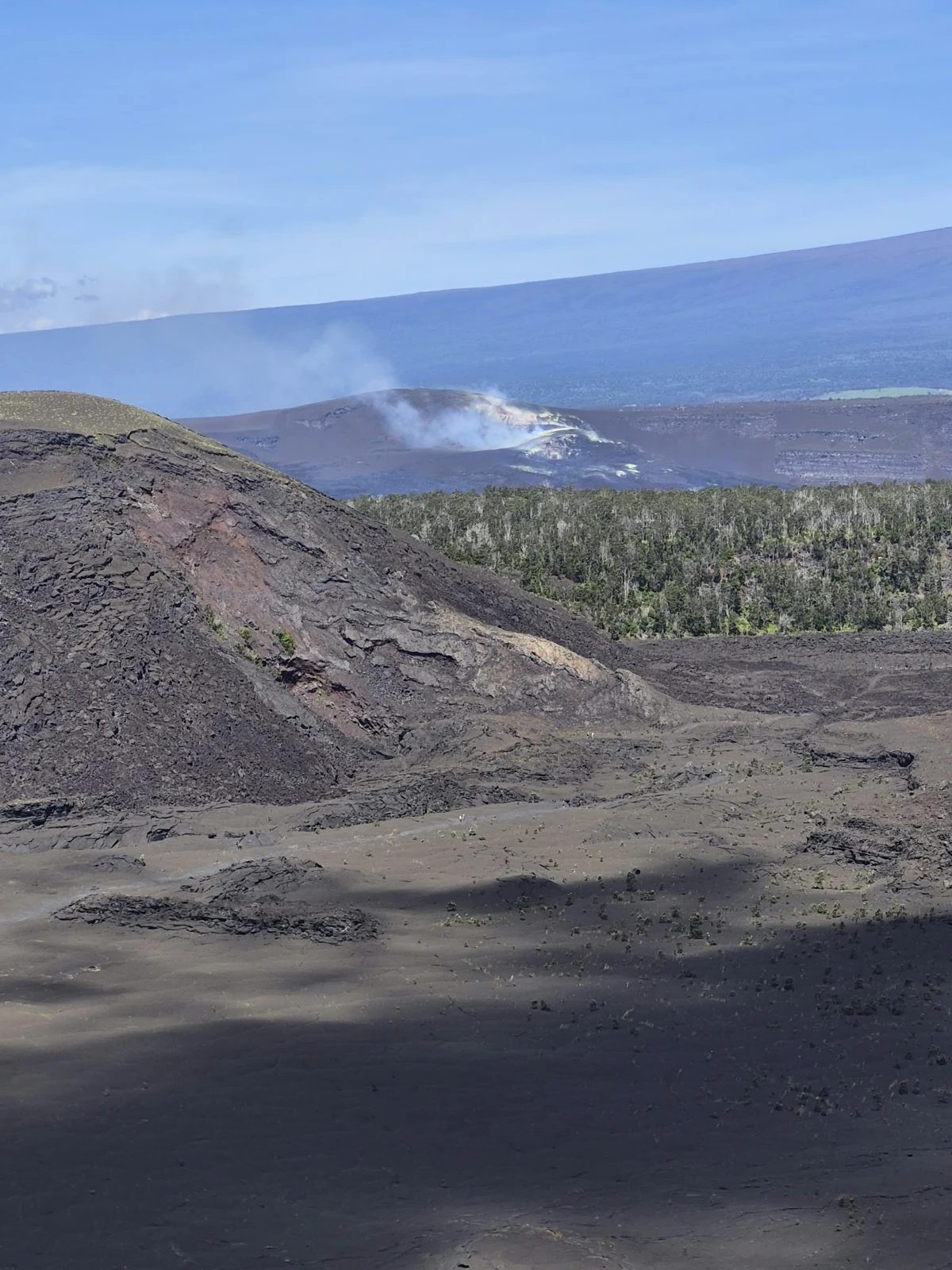
Volcano House and Hawaiʻi Volcanoes National Park were already planned stops. Being there turned them into something more. “Hi Lugs2 we are at the Volcano...need a rain jacket.. 🌦...what can you tell me about the geology and if there is any linkage between the volcanoes and the earthquake fault line please?” The on-location question joined practical weather to curiosity about the place. The useful progression was no longer just reading about a volcano: plan the stop, experience it, ask a question there and carry the understanding into the next part of the day.
That pattern continued around Haleakalā, cloud and weather; Kīlauea and Mauna Loa; Chain of Craters Road, Hōlei Pali and a coastline shaped by lava. Even the Grand Canyon’s DUDE shorthand — Deposition, Uplift, Downcutting, Erosion — provided a comparison with a landscape still being constructed. The point was not to come home as geologists. It was to see more in the place we were already standing.
The history travelled with us as well. Captain Cook brought a Teesside connection into conversation with the Hawaiian perspective; Kealakekua and Puʻuhonua o Hōnaunau widened the cultural context rather than simply becoming names to tick off. Pearl Harbor prompted a different reflection on memory, conflict, repetition and what happens as lived history becomes distant history.
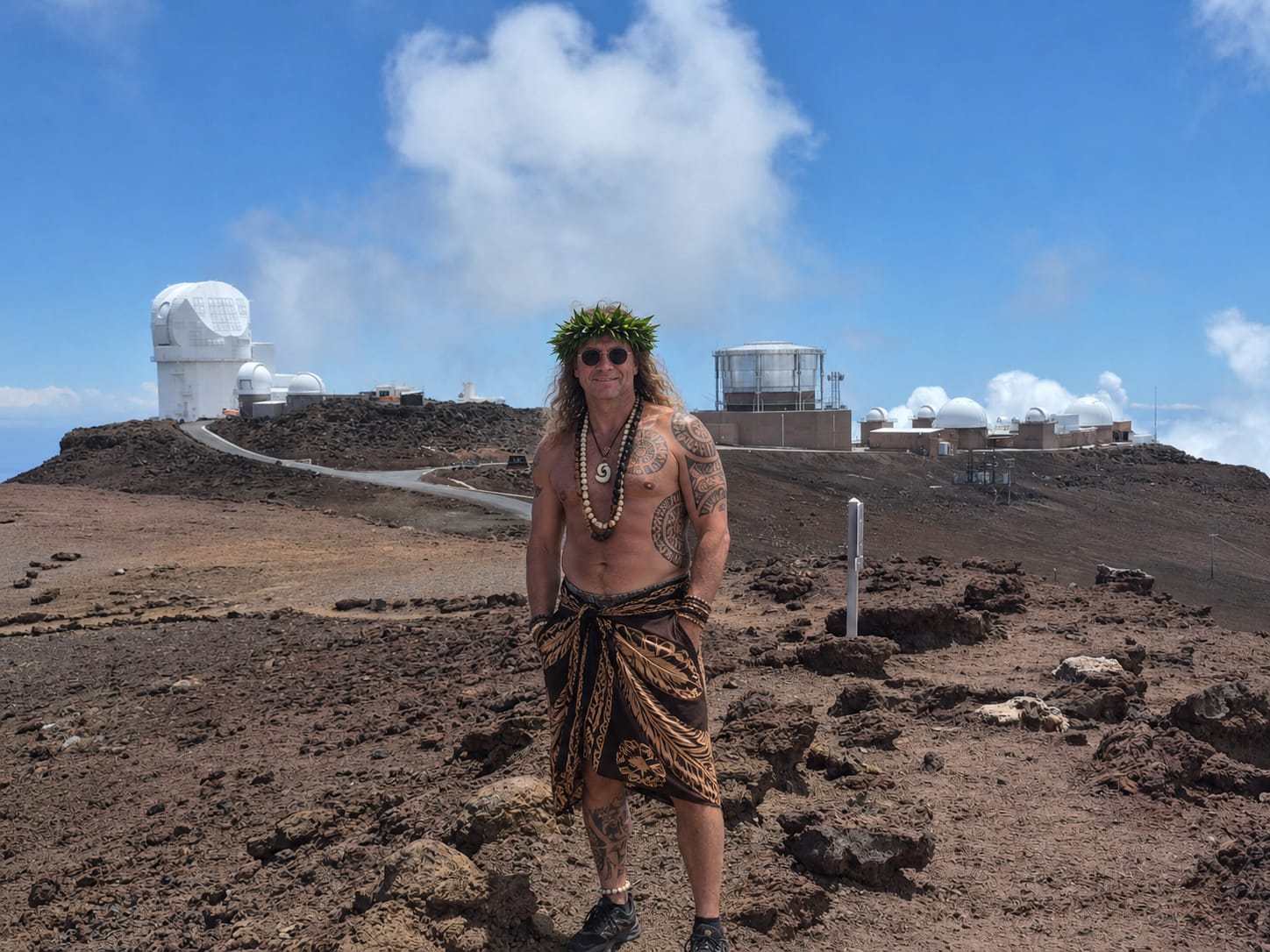
From itinerary to memory
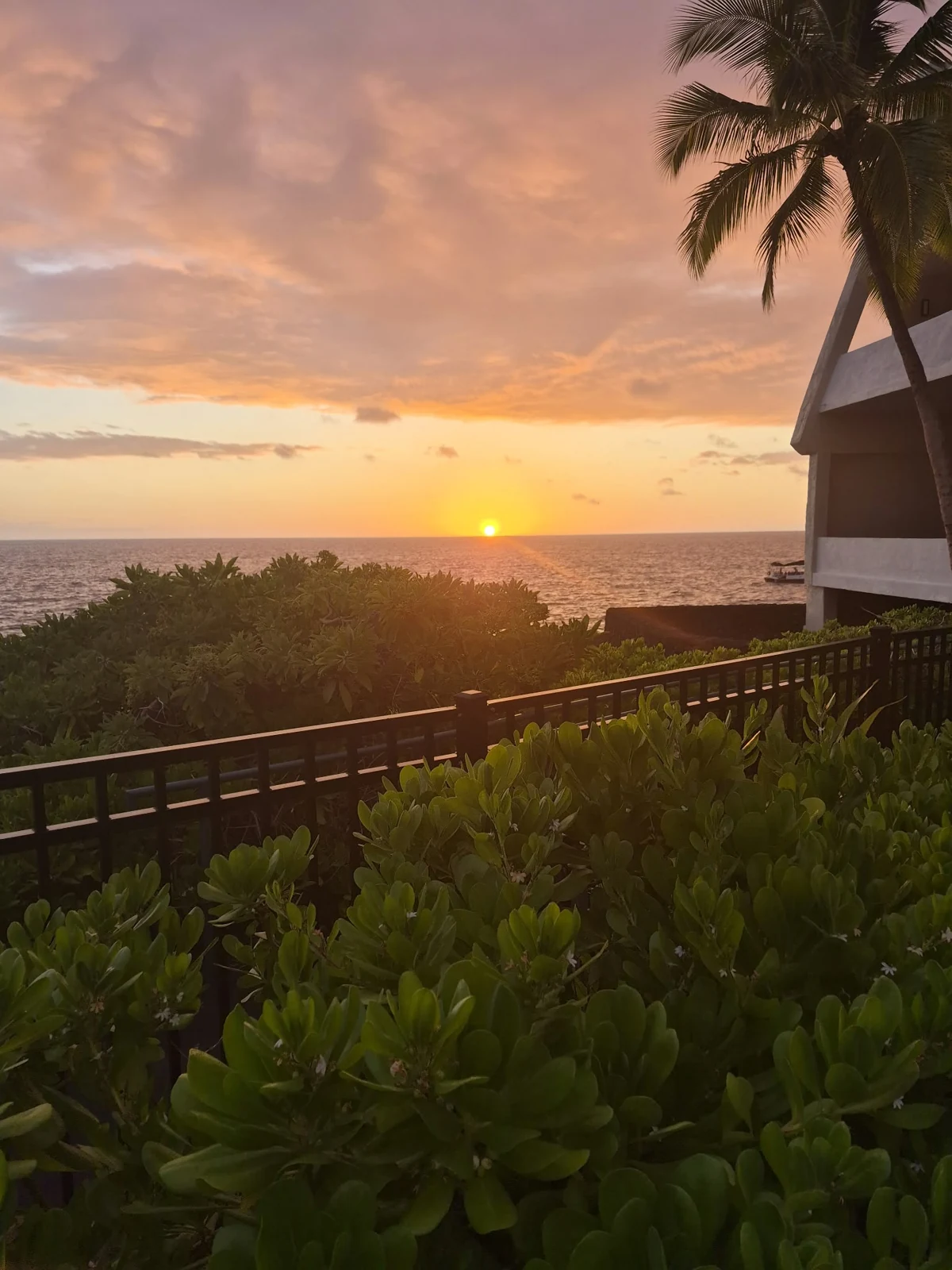
By the end, the collaboration had done more than organise three islands. It had helped plan, troubleshoot, adapt, explain, reflect and turn experiences into things worth remembering. Not everything went perfectly: weather interrupted ideas and the Los Angeles leg was a less satisfying finish. But the imperfect moments are part of the story. The photographs retain what we saw; the conversation also retains what we were trying to understand. Together they became a richer record than either could hold alone.
The itinerary was an important milestone, but not the end product. The larger outcome was that the plan came with us, the conversation kept going, and the journey became memory. Context itself had become an asset.
Human, AI and reality — what each contributed
| Human | AI | Real world |
|---|---|---|
| Curiosity, preferences, bookings, approvals, lived experience, judgement and final responsibility | Research, comparisons, itinerary production, troubleshooting support, contextual explanations, adaptation and retention of decisions | Weather, availability, energy on the day, unexpected events and encounters that generated new questions |
What is transferable?
Hawaii is our example. What made the collaboration useful was remembering our preferences, earlier decisions and practical details, so we could adjust the plan as the trip unfolded. Start with curiosity and add structure only when it earns its place. Keep the plan available during the experience, ask questions where they arise, adapt to what happens, and retain the learning. The human still decides what is worthwhile, makes bookings and acts on authoritative local safety advice.
The recurring pattern: Plan → Experience → Ask → Adapt → Learn → Continue. It works for travel, but could equally help with a house move, family event or any sustained activity in which real life is unlikely to follow the neat version.
Grey Matters connections: Learn · Plan · Decide. This project also illustrates sustained context and real-time support rather than a one-off question-and-answer exchange.