
Cosmogenic Selection
What Persists Changes What Can Happen Next
A Conceptual Thought Experiment
CGS Narrative — v1.1
Introduction
There is no shortage of explanations for how different parts of the universe work. Physics describes matter, energy, fields and spacetime with extraordinary precision. Cosmology takes us back towards the earliest stages of the universe we can observe. Chemistry explains how atoms combine into increasingly complex structures. Biology tells us how life evolves, while neuroscience and cognitive science are beginning to explain how organisms sense, learn and model their surroundings.
Yet when all those stories are placed alongside one another, a different question begins to appear, is there something fundamental that connects them? We are not looking for one hidden force operating everywhere, or one equation waiting to replace physics, chemistry or biology. The question is simpler than that, although perhaps no less ambitious: could there be a recurring way in which organised reality changes as the universe develops? That question sits at the heart of this thought experiment.
This thought experiment did not begin in its present form. It began as a deliberately playful conceptual Theory of Everything: an attempt to imagine one coherent journey from Almost Nothing through Something and Everything to Beyond. That first exploration gave us much of the narrative architecture that still survives. It gave us an analogy via Poker that helps to illustrate some of the more abstract thought and it gave us the Royal Flush and the possibility of recursive cosmogenesis. With the benefit of hindsight, we probably tried to explain too much, particularly the transition from abstract possibility into physical actuality, which was never fully explained.
The Theory of Emergence Research Programme (TERP) grew from the decision to challenge that first account rather than defend it. TERP became the research process through which we tested scientific footing, exposed the missing actuator, retired claims we could not support and kept the ideas that survived. It remains the research programme behind this work, rather than another theory competing with the sciences on which the narrative depends.
What emerged from that process is the conceptual thought experiment presented here, which we have called Cosmogenic Selection, or CGS. From this point onward CGS is the name we will use for the proposition and the narrative itself; TERP can remain behind the scenes doing the ongoing research, challenge and revision. Cosmogenic Selection can be expressed in one deliberately plain sentence: What persists changes what can happen next.
On its own that risks sounding trivial, so the important part is what underpins it. Reality contains differences, which then enter relationships. Some outcomes persist more effectively than others. When that persistence leaves a consequence, whatever happens next no longer begins from the same set of possibilities. History has entered the process. Sometimes retained organisation does something more interesting still, instead of merely restricting what can happen next, it creates access to possibilities that were not previously available.
Stable matter makes chemistry possible. Stars manufacture elements that did not previously exist in useful abundance. Life begins actively maintaining the conditions of its own persistence. Heredity carries successful organisation beyond the individual. Intelligence retains experience and starts modelling possible futures before acting. Culture and technology allow those models to persist outside a single mind. Eventually, reality contains systems capable not only of responding to what exists, but of imagining what does not yet exist and acting to make some of those possibilities real.
The mechanisms at each stage are very different, a star does not evolve like an organism, and an atom does not make a decision. The CGS proposition is that beneath those different mechanisms we may be able to recognise a recurring organisational relationship involving difference, relation, persistence, retained consequence and changed possibility. Whether that relationship proves genuinely useful across such different scales is one of the things we are trying to find out.
Its proposed continuity lies not in one mechanism operating everywhere, but in the way retained consequences repeatedly reshape what becomes reachable next as the mechanism itself changes from regime to regime. CGS therefore depends upon the specialist sciences for those mechanisms; its own question is whether they can also be understood as parts of a larger organisational history when viewed across domains.
Einstein famously said that God does not play dice with the universe. After a considerable amount of cosmological head-scratching, our own thought experiment arrived at a slightly different possibility: perhaps the universe is less like dice and rather more like a game of Poker. Some of what follows becomes rather abstract, so we will occasionally use Poker to help illuminate the thought process.
Dice give us randomness. Poker gives us structured possibility. There is a deck, a set of rules and a range of possible hands. Chance remains, but it operates within constraints. Once cards are in play, the state of the game has changed and later possibilities depend partly upon what has already happened.
That makes Poker a useful language for CGS. The deck can represent a structured possibility space; the rules, the constraints; a hand, a realised configuration; and the cards already on the table, retained history. Much later in our story a player will finally appear: an organised system capable of reading the state of play, imagining alternatives and deciding what to do next.
The analogy will not explain physics for us; its job is simply to make some difficult ideas easier to see. It also gives us another useful thought in that Poker is only one possible game. Change the rules and different hands become meaningful. Change them further and an entirely different game may emerge. That possibility will matter later when we ask why our universe has this particular combination of laws and constants, whether other coherent universes could be different, and whether universes themselves might belong to a deeper evolutionary history. The journey has four broad movements.
Almost Nothingness strips the question back as far as we responsibly can. We do not begin with literal nothingness, nor do we claim to explain why actuality exists at all. We begin with reality already capable of transformation and ask what minimum architecture is required before difference can acquire consequence.
Something asks how those consequences become physically embodied. How does an actual quantum reality become a dependable universe of stable relationships, records, matter and chemistry; a universe capable of building upon what has already happened?
Everything follows the particular universe we inhabit. Gravity gathers matter, stars manufacture new ingredients, chemistry becomes extraordinarily productive and the hand we have been dealt begins to look remarkably fertile. Life then changes the game again. Persistence becomes active, history becomes inheritable, intelligence begins modelling possible futures and eventually models themselves become part of the physical world.
Beyond asks what follows if that trajectory continues. Does increasing intelligence require new forms of language, mathematics and visualisation? Could our ability to understand reality expand beyond the limits of unaided human cognition? Could universes themselves reproduce, inherit or evolve? And if intelligence eventually understood such processes, could something produced by a universe one day participate in producing what comes next?
Those final questions take us deliberately beyond established science. That is allowed here, this is a conceptual thought experiment after all, not a claim that every destination we explore is true. Where science already gives us strong footing, we use it. Where CGS offers an interpretation, we say so. Where the argument becomes speculative, we let it be speculative rather than quietly dressing it up as established fact. There is, however, one unavoidable complication. We are trying to understand the universe while standing inside it.
Every instrument we build, every equation we write and every thought we have is itself part of the reality we are trying to explain. We cannot simply step outside the whole system, turn around and inspect it from somewhere else. That does not mean there are things we can never know, but it gives us a reason to distinguish between the limits of what we can understand now and any deeper limit that may arise from being embedded within the thing we are trying to understand.
Everything we know is gained through relationships between an observer, its means of access and a wider reality. As those means of access improve, more relationships can become available to us. That simple point will return later when we distinguish foundational reality from experienced reality and when we ask whether the range and depth of relationships an embedded intelligence can recognise and use can be expanded. We have named this capacity Relational Bandwidth.
We borrow the name Gödel for that distinction, but cautiously. Gödel's incompleteness theorems concern the limits of sufficiently rich formal mathematical systems. They do not prove that the universe is mathematically incomplete, that physics must eventually fail, or that some metaphysical reality necessarily lies beyond science. We use Gödel as an analogy and a warning: a system may not be able to account completely for every condition required for its own existence using only resources available from within itself. That approach gives us two different edges.
The Gödel Boundary is the nearer one. It marks the current edge of what we can responsibly know, describe or distinguish between. It is not fixed, telescopes moved it, microscopes moved it, relativity and quantum mechanics moved it. Mathematics, particle accelerators, gravitational-wave detectors and increasingly powerful computation continue to move it. As our ability to sense, represent and connect relationships expands, things that once sat beyond explanation can move inside the Boundary.
The Gödel Horizon is different. It is the deeper question of ultimate grounding: why there is any actual reality capable of having laws, relationships and transformations in the first place. We do not know whether that Horizon is permanently inaccessible or simply far beyond our present Boundary. Natural necessity, deeper physics, a relational or holographic foundation, Creator, Architect, simulation and possibilities for which we do not yet possess adequate concepts remain open in very different ways. Naming the Horizon does not answer the question. It simply stops us pretending that we already have. This distinction gives the whole thought experiment its arc.
We begin just inside our present Gödel Boundary, with physical actuality already switched on. From there CGS follows how difference becomes consequential history, how history becomes physical structure, how structure becomes a fertile universe, and how that universe produces life, mind and eventually systems capable of modelling the reality from which they emerged. Then, in Beyond, the direction turns back towards the beginning.
Science, mathematics, new forms of visualisation, artificial cognition and perhaps entirely new representational languages may expand what we have called our relational bandwidth. If they do, our Gödel Boundary may move outward again. Questions currently beyond science may become tractable; distinctions we cannot presently make may become visible. Then, if universe generation itself ever became understandable, the arc could become deeper still. Something produced inside a universe might eventually participate in the conditions from which another universe emerges.
But even then, the distinction remains, we may move the Boundary without reaching the Horizon.
A parent universe, a deeper law, an Architect or a new account of foundational physics may explain what lies beyond our present view while simply revealing another layer beneath it. The ultimate question, why is there an actual reality capable of any of this, may remain.
So the journey that follows is not a straight line from ignorance to final explanation. It begins at a Boundary, travels through what our universe has become, and eventually returns towards that Boundary with a more capable observer. Whether the Boundary moves is something we can explore. Whether the Horizon can ever be crossed remains open. That is where our thought experiment begins.
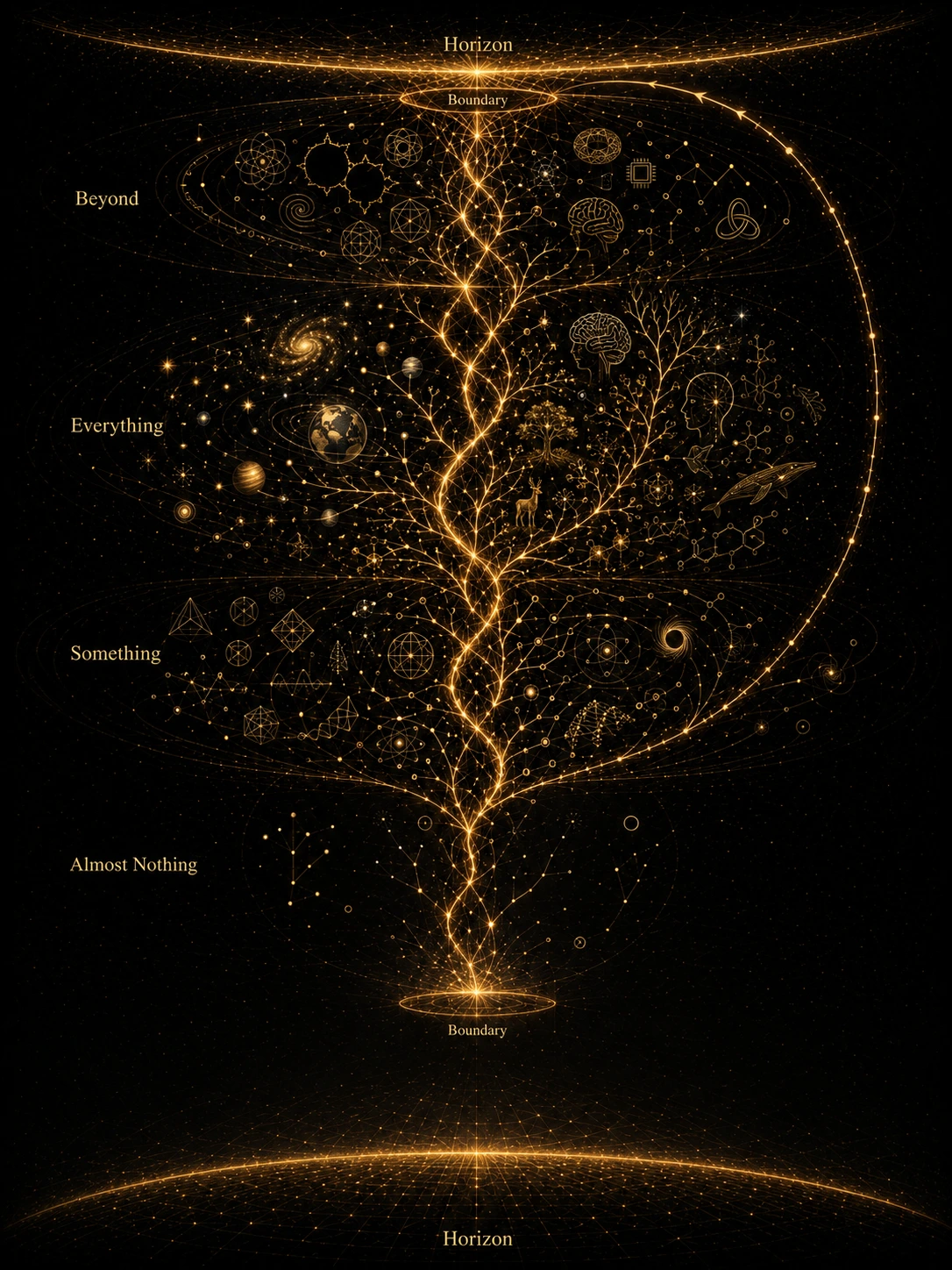
Figure 1 — The CGS narrative architecture.
The conceptual journey begins just inside the present Gödel Boundary and follows consequential organisation through Almost Nothing, Something and Everything into Beyond. The central branching structure represents cumulative retained consequences and changing possibilities across different organisational regimes. Beyond introduces the return towards the Boundary through expanded relational bandwidth and the speculative possibility of cosmogenic recursion. The Horizon remains unresolved at both ends of the journey.
The Gödel Boundary and Horizon
We ended the Introduction at a Boundary. That choice is deliberate because every account of the universe eventually reaches a point where explanation begins to depend upon something it has not itself explained. Physics may tell us how fields behave, but the existence of the fields is already assumed. Cosmology can take us extraordinarily far back into the history of our universe, but its models still begin with physical structure, laws and relationships already capable of doing something. Push the question back far enough and eventually we arrive at the more basic problem that sits behind the rest of this thought experiment: why is there any actual reality capable of transformation at all?
We do not have an answer. That is not a reason to stop asking questions. Science has repeatedly moved what once looked like a hard boundary. New instruments reveal relationships that were previously invisible, new mathematics makes unfamiliar structures tractable, and new theories can turn an apparently philosophical problem into a scientific one. Our Gödel Boundary is therefore not intended to mark a permanent limit to human understanding. It marks something much more practical: the present point beyond which our explanatory footing becomes too weak to keep making the same kind of claim with confidence.
Beyond that Boundary lie several radically different possibilities. Actuality may simply be a fundamental fact requiring no deeper cause. Present quantum theory may sit above some more basic physical structure that we have not yet discovered. Spacetime itself may emerge from deeper relational, informational or holographic organisation. There may be multiple foundational domains rather than one. Our universe might belong to a wider multiverse, exist within some computational architecture, or ultimately depend upon something better described through concepts such as Creator or Architect. There may also be forms of actuality for which none of our present categories are remotely adequate.
We are not suggesting that these possibilities carry equal scientific weight. Some arise from serious programmes in fundamental physics, others are philosophical or metaphysical interpretations, and some remain little more than possibilities we cannot yet exclude. Their importance here is simpler: our present Boundary does not justify pretending that the ultimate question has already been reduced to one answer.
We need some way of referring to whatever ultimately underwrites actuality without quietly turning that unknown into an explanation, so for this we use the word Substrate. Our use of the term is deliberately restrained. The Substrate is not proposed as a hidden substance underneath quantum fields. It is not automatically mathematics, information, consciousness, a cosmic computer or God wearing a scientific badge. It has no assigned mechanism. It simply names whatever ultimately makes an actual, transformation-capable reality possible. That distinction takes us from the Boundary to our Gödel Horizon.
The Boundary describes the present limit of our access and explanation. The Horizon marks the deeper grounding problem that may remain even if that Boundary moves. We may discover new physics beneath quantum theory and thereby push the Boundary outward, but we can still ask why that deeper physics exists. We may discover that spacetime is encoded in some more fundamental holographic or relational structure; again, the Boundary has moved, but the question of why that structure is actual remains. Even a parent universe, Architect or external computational reality would move the explanatory problem outward rather than necessarily eliminate it.
The same distinction can also be viewed from the perspective of an embedded observer. Foundational reality is whatever reality actually is, whether or not it lies within the limits of any one observer’s access. Experienced reality is the coherent world available through that observer’s particular means of sensing, modelling and interaction. In that sense, the Gödel Horizon concerns the deeper grounding of foundational reality, while the Gödel Boundary marks the present limit of what an embedded observer can bring into experienced and explanatory reach.
The Horizon therefore does not tell us that explanation must fail. It tells us where this thought experiment refuses to pretend that explanation has already succeeded. That leaves us with a choice about where the scientific part of our story should begin. The earlier version of the thought experiment tried to reach further back, asking whether logic, mathematics, information and abstract possibility could provide a pathway into physical actuality itself. The attraction is obvious: if that worked, the journey really could begin from almost nothing and build its way towards a universe.
Eventually, however, the same problem kept returning. A mathematical relationship can describe how something would transform without making anything actually transform. Information can distinguish one state from another without explaining why either state has physical consequence. Logical consistency can tell us whether a description contradicts itself without switching on a universe. There was still an actuator missing.
That failure turned out to be useful because it forced us to separate two questions that had become entangled. One is the ultimate question of why actuality exists at all. The other is what happens once an actual reality capable of transformation already exists. CGS is therefore aimed at the second question.
So rather than disguise the missing actuator, we begin on the other side of it. Our scientific story starts with actuality already present: not planets, atoms or familiar spacetime, and not necessarily the complete physical framework described by today's theories, but the minimum footing current science gives us reason to take seriously, an already actual foundational physical reality whose character is quantum and whose states are capable of difference, relation and transformation.
That starting point remains provisional; quantum theory may not be the final description of foundational reality; it may itself emerge from something deeper. If our Boundary moves, the scientific starting point can move with it. CGS does not depend upon today's quantum theory being the last layer of the story. It depends upon something more basic: whatever the foundation eventually proves to be, it must already be actual and capable of transformation before our account can begin. The actuator is switched on. Reality can differ and reality can change.
That gives us the first question CGS can genuinely address: if actual reality is capable of transformation, what is the least that must happen before one transformation begins to matter to another? That takes us from the Boundary into Almost Nothing.
Almost Nothing
If the Boundary tells us where our present explanation begins, Almost Nothing asks what the minimum architecture is once actuality is already switched on. We are not beginning with literal nothingness, nor trying to manufacture physics from logic. We have already accepted that something actual exists, that it can transform, and that its deepest currently defensible description is quantum in character. That allows us to ask a much cleaner question: what is the least that must be true before change can acquire consequence?
Our answer begins with difference. Not a particle, a force or a location, but simply the fact that one state, configuration or possibility can be distinguished from another.
This is not that.
It sounds almost embarrassingly modest, yet without difference there is nowhere for the story to go. If every possible state were indistinguishable from every other, there could be no alternatives, no relationships between alternatives, no patterns, no history and ultimately nothing that could count as organised reality. Difference is not yet organisation, but it is the first condition organisation requires.
Poker gives us an ordinary way of seeing why. A King of Hearts is not a Seven of Clubs. That fact tells us almost nothing about the game, but remove the distinction and the game disappears. There can be no pair, straight, flush or Royal Flush if one card cannot remain meaningfully different from another. Difference, then, opens the possibility of alternatives.
This or that.
An actual system capable of transformation need not remain in one configuration. Different states or pathways can be available. At this stage there is still no decision, no intention and no player at the table; there is simply structured possibility. That distinction matters because possibility need not mean that anything imaginable can happen. A deck contains many possible hands but not every arbitrary collection of cards. Poker is rich precisely because uncertainty exists inside constraints. In the same way, reality may possess many possible transformations without possessing unlimited ones. Alternatives alone, however, still do not give us organisation. For that they must be capable of standing in relationship.
This and that.
This part of the sequence matters because reality does not always have to resolve immediately into one classical outcome rather than another. Different states may coexist, interact, combine, correlate or, where the physics permits, remain jointly represented. We are not choosing an interpretation of quantum mechanics here. The important point is that organisation can arise through relationships between alternatives; one alternative does not always have to disappear first.
A relationship can also possess properties that the things considered separately do not. Five unrelated cards are simply five cards; arrange them into the right relationship and suddenly a straight or a flush exists. The property belongs to the configuration, not to any one card.
The same intuition appears much later in the world we know. Atoms acquire chemical possibilities through their relationships. Molecules possess properties their constituent atoms do not possess in isolation. A living membrane only has meaning because there is an inside and an outside. A mind knows a world through relationships between itself, its senses and whatever lies beyond them.
Once that relational pattern has appeared, the next question is whether similar organisational roles recur later in very different forms, even when the underlying mechanism has changed. These later examples do not directly prove anything about the foundation. They are our first Echoes: transformed recurrences that give us a line of sight between an abstract beginning and the universe we eventually recognise. Difference remains important. Relation remains important. What changes is the mechanism through which each appears.
Some of the most ordinary examples are relational in exactly this sense. Sound is not a property sitting wholly inside a vibrating object or wholly inside a listener; what is heard depends upon a chain of relationships between source, medium and receiver. Music goes further again: individual notes matter, but rhythm, harmony and melody exist through organised relations among them. These examples prove nothing about foundational physics, but they make the recurring role of relation easier to recognise.
At our present starting point we have only difference and relation, and nothing yet requires a relationship to last. Most arrangements could appear and disappear without consequence. If every transformation erased the organisation that came before it, reality might remain active forever without ever accumulating a history. So, another threshold is required, some relationships must recur.
A recurring relationship gives us a pattern, but even that is not enough. A pattern that appears briefly and disappears completely has left no inheritance. It has happened, but nothing that follows needs to care that it happened. The crucial change is persistence: enough of the organisation survives transformation for it to remain recognisable.
Persistence does not mean that nothing changes. Quite the opposite. Many persistent things endure precisely through change. An atom can interact while remaining that kind of atom. A whirlpool retains its recognisable structure while the water composing it continually changes. Much later, a living organism will maintain itself while constantly replacing matter and energy.
What persists, therefore, is often not a frozen collection of stuff but an organised relationship. That changes how we look at apparently solid reality. The world presents itself as nouns, particles, atoms, rocks, organisms, people, while the deeper description is frequently full of verbs: interacting, binding, exchanging, maintaining and transforming. A stable thing may simply be a process that remains recognisable. Even persistence, however, is not yet the heart of CGS. Something can persist without changing anything that follows. For CGS, the important moment comes when what remains alters what can happen next. That is retained consequence. Now the grammar changes again.
This, not that.
Some possible configurations survive the relevant transformation and others do not. Some remain accessible and some disappear. Some relationships stabilise while alternatives cease to participate in the active history. There is still no selector, an atom does not prefer stability, and a crystal does not want to preserve its lattice. The language sounds like choice only because human beings encounter selection most obviously when agents choose between alternatives. Here the outcome is simply the consequence of physical constraint. Once one configuration persists rather than another, however, reality has become asymmetrical in a new way. One route now contains something the other does not and then comes the step that matters most.
Because this, not that…
The retained outcome alters what becomes possible next. Imagine cards beginning to appear on a Poker table. Before the first card is dealt, one space of possible hands exists. Once that card is in play, the next card no longer arrives into the original game. Some hands have become possible, some more likely and some impossible. The first card has not merely remained present; it has changed the state of play. That is the transition from persistence to retained consequence, and retained consequence creates history.
History, in this sense, is not a story told later by an observer. It is physically embodied consequence. The present contains something inherited from what happened before, and because it does, the future begins from a different possibility landscape. This is where the simple anchor at the centre of CGS finally earns its meaning:
What persists changes what can happen next.
That does not mean that everything which survives is important, or that the universe inevitably accumulates complexity. Persistent structures can disappear, branches can terminate and organisation can collapse. CGS does not require progress. The proposition is narrower: when a consequential difference becomes retained, later transformation inherits a changed starting point. In some regimes, that inheritance does something more than restrict possibilities, it creates new possibilities. In principle, that consequence should be testable by asking whether removing or altering what was retained would change what later became possible, accessible or likely to occur.
That second idea becomes increasingly important as the story develops. Stable atoms do not merely remove alternatives; they make chemistry possible. Stars do not merely endure; they manufacture elements. Life does not merely survive; it constructs and maintains local conditions in which further life can continue. Intelligence does not merely react; it represents possible futures and can act before those futures occur. The mechanisms change at every stage, but the organisational relationship may not. That is why we use the term Cosmogenic Selection.
CGS is not a force and it is not Darwinian natural selection projected backwards into physics. It is our name for a recurring architecture in which constrained possibilities produce non-equivalent consequences, some consequences persist, retained organisation changes what follows and, occasionally, what survives creates access to possibilities that did not previously exist.
The working grammar is therefore simple enough to carry with us. “This is not that” gives us distinction; “this or that” opens alternatives; “this and that” allows relation or coexistence; “this, not that” marks consequential differentiation; and “because this, not that…” gives us retained consequence and history. The sequence is conceptual rather than a literal cosmic timeline. At foundational quantum scales, distinguishability, relation and transformation may be deeply intertwined rather than waiting politely for one another in the order of our sentences. The grammar is simply our way of asking what organisational roles must be present if reality is ever to accumulate consequence.
From here the Echoes begin to matter. Physical distinction will later become chemical selectivity and biological inside versus outside. Retention will become physical record, heredity, memory and culture. Branching will become biological evolution and, later still, the modelling of possible futures. Relations will become sensing, recognition and eventually the widening relational bandwidth through which intelligence gains access to more of reality. Those later forms require entirely different mechanisms. If the Echoes are real, they should survive that change.
For now, however, we have reached the threshold we needed. Reality is actual, difference is possible, alternatives can relate, some outcomes persist, and retained outcomes can change what happens next.
Almost Nothing has become enough for history to begin.
The next question follows naturally. How does that abstract organisational history acquire a dependable physical form; a universe of stable relationships, records, matter and chemistry that can genuinely build upon its past? That is where Something begins.
Something
Almost Nothing ended at a surprisingly important point. Reality did not yet need stars, atoms or familiar space and time for our argument to begin. It needed only enough organisation for a difference to persist and for that persistence to alter what could happen next. In that limited but important sense, history had entered the story.
History, however, cannot accumulate very far if it has nothing dependable in which to be carried. A fleeting pattern may affect the next transformation and then disappear. If organised reality is ever to build upon itself, retained consequence has to acquire a more durable physical form. That is the transition into Something.
The question is no longer whether difference can matter. It is how an actual quantum reality becomes a dependable physical universe capable of carrying its own history forward.
This is where we need to separate the role of CGS from the role of established physics. We are not going to claim that persistence creates symmetry, symmetry creates conservation, conservation creates spacetime and spacetime creates matter. Modern physics gives us a much richer and more interconnected picture than any such conceptual ladder could reproduce. Our interest is different: we want to understand what those established structures contribute to the developing story of cumulative organisation. The first thing they provide is reliability.
A universe capable of building upon its own past cannot change completely arbitrarily from one moment to another. Some relationships have to remain dependable through transformation. Physics describes this dependability through powerful ideas such as invariance, symmetry and conservation. The mechanisms and mathematics belong to physics, but their organisational importance to our thought experiment is easy to see: change can occur without everything becoming unrecognisable every time it does.
Poker gives us a simple way of seeing why that matters. Imagine trying to play if the identity of a card changed whenever it moved, if a King became a Five when dealt or the ranking of a straight altered halfway through the hand. There would still be activity, but no game, because nothing that happened earlier would remain stable enough to constrain what happened later. Physical reality is not like that. Its transformations take place within dependable relationships, and that gives CGS something it now needs: a state of play that can carry consequence forward.
Mathematics becomes especially important here. We do not need the claim that mathematics itself actuates reality: an equation describing a transformation is not the cause of the transformation. Neither do we treat mathematics as merely a convenient human description. Our working position is that mathematical relationships are there to be discovered. Mathematics is one of the formal means through which an embedded intelligence recognises, expresses and tests relational structure already present in reality.
It can expose difference without relying on ordinary objects, compare states that cannot be directly visualised, identify invariance, represent transformation and reveal relationships far beyond everyday intuition. Our view is that mathematics is primary among our formal ways of accessing organised physical reality not because the universe must literally be 'made of mathematics', but because mathematical structure can capture relationships that remain real whether or not a human observer has yet recognised them.
That thought will matter again later. Here, mathematics gives us access to the dependable relational architecture of physical reality. In Beyond, the same capacity reappears as one of the principal ways an intelligence embedded within that reality can extend what it is capable of recognising. The mathematics is not creating the relationship; it is helping the observer discover it.
Once physical relationships are dependable, differences can acquire structure in a much richer sense. Our universe provides that through an interconnected architecture of quantum states, fields, spacetime, geometry and interaction. We do not need to decide which of these is ultimately fundamental, and future physics may reorganise that hierarchy completely. What matters for CGS is that our realised universe possesses a coherent framework in which physical states can differ, interact, propagate and remain stable enough for consequences to accumulate.
Geometry gives physical structure to separation, trajectory, locality and causal connection. Spacetime provides the common framework within which change and relation are organised. Quantum fields describe the dynamical background from which what we call particles appear as excitations rather than tiny solid objects moving around an empty stage. Gravity adds another striking relational feature: in General Relativity, matter and energy influence spacetime geometry while geometry, in turn, influences the trajectories followed by matter and energy. None of these features has been generated by our simple grammar. They are how the actual universe works. What CGS asks is what they make organisationally possible. One answer is that a transformation can now leave a record.
A detector changes state when something interacts with it; an atom can be excited; a particle track can remain in a chamber. In each case, the present is physically different because of what happened before. That is the key point: the past has left a record. Not memory, not awareness, simply retained consequence given durable form.
Quantum decoherence is relevant because interaction with an environment helps explain why stable classical records emerge from an underlying quantum description containing richer alternatives. It does not settle every interpretation of quantum mechanics and it certainly does not require a conscious observer to make the universe real. For our purposes, the narrower point is enough: physical interaction can produce durable histories long before anything exists to experience them. The universe can carry a usable past.
This is also where the retention Echo begins to acquire real weight. What is now a physical record will later become something very different. Biology will retain organisation through heredity; nervous systems will retain consequences through memory; cultures will retain them in language, writing and institutions. The carrier changes completely, but the organisational role recurs: something from the past remains present enough to alter what follows.
Once stable states and physical records exist, the next development becomes possible. Reality acquires reusable organisation. A stable particle or atom does not have to be reconstructed from the quantum foundation every time a later structure needs it. It can become part of something else. Atoms combine, bound structures form and molecules acquire geometries, energies and reaction possibilities that their constituent atoms do not possess separately.
Chemistry is where the cumulative character of this becomes impossible to miss. Hydrogen and oxygen have their own properties, but organise them into water and an entirely new range of behaviours appears. Carbon arranged one way behaves differently from carbon arranged another. Molecular shape matters, bonds matter, energy levels matter and reaction pathways matter. The important point for CGS is that constraint is doing two things at once. It is closing possibilities and creating them.
When atoms bind, they surrender some of the freedoms available to them in isolation. Yet the molecule they form can participate in interactions that were unavailable to either atom separately. The lower-level possibility space has narrowed, while a new higher-level possibility space has opened.
This is one of the most important developments in the whole CGS story. If selection meant only that unstable possibilities disappear and stable ones remain, reality would become progressively poorer. Instead, retained organisation can become generative. A stable structure can become the platform from which previously unreachable arrangements appear.
Poker captures the intuition neatly. A card already on the table constrains the hand because some outcomes have disappeared, but it also makes combinations possible that did not exist before it was dealt. Add further cards and entirely new configurations become available. The history of the hand is therefore simultaneously closing and opening futures.
Physical reality now does something analogous, although through vastly more sophisticated mechanisms. Fields permit stable excitations, stable excitations allow bound matter, matter permits atoms, atoms permit chemistry, and chemistry opens a combinatorial landscape enormously richer than the physical possibilities available before stable atoms existed. Each stage depends upon what came before without being reducible to it. That is the point where emergence becomes more than an increase in the number of things. It becomes the appearance of new ways in which things can matter together.
Seen this way, Something gives the CGS sequence its first mature physical expression. Difference has become physically measurable. Relation is embodied in interaction. Persistence appears as stable state. Retained consequence becomes record. Constraint becomes dependable architecture, and that architecture creates new possibility. CGS has not replaced a single equation of physics; it has given us a way of seeing what those physical mechanisms collectively make possible.
The universe no longer has to begin again from scratch after every transformation. It can inherit structure, recombine it and build upon it. Almost Nothing gave us the possibility of history. Something gives that history a physical body. Once stable matter and chemistry exist, the question changes again. A universe capable of storing and recombining organisation is impressive, but the universe we inhabit does considerably more than preserve what already exists. Gravity gathers matter into enormous structures. Stars transform simple ingredients into new ones. Generations of stars alter the chemical inventory inherited by later generations. Planets concentrate those materials into persistent environments and gradients keep transformation active.
Eventually, one particular combination of physical laws and conditions produces something extraordinary: a universe capable of stars, black holes, chemistry, life and minds. The game now has its rules, the deck is in play, and the hand is beginning to reveal itself. That is where Everything begins.
Everything
Something left us with a universe capable of carrying its own history in physical form. Stable matter could persist, chemistry could recombine inherited structure, and the universe had acquired a dependable architecture that allowed later organisation to build upon what already existed rather than repeatedly starting again from the foundations.
The universe we inhabit, however, does something more interesting than simply preserve organisation: it becomes productive. Gravity gathers matter into stars and galaxies; stars transform simple elements into heavier ones; stellar generations disperse those new ingredients into the surrounding universe, where later stars and planets inherit them. Chemistry becomes richer, gradients keep reactions active and persistent environments appear in which increasingly elaborate combinations can be explored.
Astrophysics already explains those mechanisms. The CGS question is what their existence changes. A universe before generations of stars is not organisationally equivalent to the universe afterwards: carbon and other heavy elements become available in useful abundance, rocky planets become possible, and chemical landscapes open that could not previously be explored. The universe is therefore not merely getting older. In important respects, it is changing what it is capable of becoming.
A star makes the point particularly clearly. Its significance is not simply that it survives for billions of years, but that while it persists it transforms its surroundings, manufactures new elements, drives gradients and contributes material to later generations of cosmic structure. Its persistence is productive because what it does while it exists alters the possibilities available afterwards.
The same pattern appears at larger scales. Galaxies organise generations of stars and redistribute matter, while planets gather the consequences of earlier cosmic history into local environments where atmosphere, ocean, rock, ice and internal heat can maintain boundaries and gradients. A rocky planet is, in one sense, accumulated cosmic history brought together in one place. History has become environment, and environment changes what chemistry can explore.
This is also where our idea of an Echo starts becoming easier to see. Almost Nothing began with difference. Here difference appears in a much richer physical form: gradients of temperature, pressure, chemical concentration and energy can now drive transformation. Relation becomes gravity, binding and interaction. Retention becomes stable chemistry and inherited material structure. Possibility construction becomes stars, elements, planets and new reaction landscapes. The mechanisms are completely different from the abstract grammar with which we began, but the organisational relationship is recognisable.
By now the Poker analogy begins to earn some of its earlier promise because the hand has been building for a very long time. Our universe has a viable dimensional structure, dependable physical laws, persistent matter, gravity capable of gathering it, long-lived stars, black holes, heavy elements, chemistry, planets and sustained gradients. Eventually, at least once that we know of, this combination also supports life and intelligence. Taken together, these features make our realised universe extraordinarily fertile.
In the language of our thought experiment, we are looking at a Royal Flush. We do not mean the best possible universe, the only viable universe or evidence that somebody deliberately dealt the cards. A Royal Flush is simply our metaphor for an unusually fertile combination under one particular ruleset: a chain of mutually enabling conditions that supports stable matter, long-lived stars, black holes, heavy-element production, chemistry, planets, life and intelligence.
Another coherent universe might look very different. Different constants or laws might still permit durable organisation while producing a cosmic architecture unlike anything available here. That raises the more interesting question: why this hand? Anthropic reasoning gives one important part of the answer, observers can only find themselves in a universe compatible with observers, but CGS allows one further question to be planted here and answered only later: what if the fertility of this hand itself has a history? For now, that remains a seed. Beyond is where we will ask what universe reproduction, inheritance and variation would actually require.
For now, we follow what this particular hand actually does, because one of the possibilities it opens is very different from everything that came before: life.
A star persists because the physical conditions supporting it remain in place; a crystal retains organisation through its lattice; a molecule can survive particular transformations because its bonds remain stable. Life changes the relationship between organisation and persistence because a living system does not merely happen to remain organised. It begins participating in the preservation of its own organisation.
Its simplest expression is a boundary. At the beginning of the narrative, 'this is not that' was an abstract distinction, in life, distinction becomes embodied as inside and outside. A membrane separates without completely isolating, allowing some things through, keeping others out and helping to maintain internal conditions that differ from the surroundings. The distinction has become functional because some differences now matter relative to the continued viability of the system.
Temperature can be too high or too low; a chemical gradient can represent usable energy; one molecule may support repair while another causes damage. No conscious understanding is required, but the difference has become significant for the organisation itself. Metabolism, regulation and repair deepen that change: living systems continually exchange matter and energy with their surroundings, so what persists is not the same material but the organisation maintained through that exchange. A living thing is therefore not simply stable matter; it is maintained organisation.
This introduces a modest but important form of direction without implying conscious purpose. Some states now support continued viability while others undermine it, so living organisation acquires function-like direction: not a goal imposed on the universe, but a consequence of a system having conditions it must maintain if it is to continue.
Heredity changes the regime again. Individual organisms do not persist indefinitely, so biological history would continually reset if every successful organisation vanished completely with the individual. Heredity allows aspects of that organisation to cross generations; variation reopens nearby alternatives; and natural selection changes which inherited arrangements become common over time. Biology has its own mechanism and should keep its own name. CGS does not need to redescribe Darwin; its interest is that persistence has become active, reproducible and adaptable.
Biology adds another development because organisms do not merely adapt to environments; they also alter them. Plants transform atmospheres and soils, microorganisms change chemistry, corals build reefs and animals construct nests, burrows and dams. Life creates niches that later life can inherit, so retained organisation begins modifying part of the landscape in which later persistence will be tested.
Nervous systems shorten that loop. An organism can now retain consequences within a lifetime, learn from them and change its behaviour without waiting for genetic change. Some relationships begin to matter as attraction or avoidance, reward or threat, and those differences can then be used to guide future action. This is where Mind begins to grow naturally from Life.
Eventually, some organisms become capable of recognising relationships with increasing flexibility. For CGS, intelligence is not simply a measure of information storage, computational speed or problem-solving performance. Its distinctive role in our narrative is relational recognition: the ability of an organised system to identify relationships in the reality around it and use them in flexible ways.
That capacity appears in many forms. Animals navigate using relationships humans cannot directly sense. Predators anticipate movement. Social animals interpret behaviour. Human minds build increasingly abstract models of relationships that have no obvious sensory representation at all.
Mathematics gives us perhaps the clearest example. The relationships mathematics exposes are not created by the mathematician simply because they have been written down. From our working view, they are discovered: structures and relationships that were available within reality before intelligence became capable of recognising and representing them. A mind can therefore gain access to relationships that no eye can see and no hand can touch.
The universe has now produced systems that can recognise patterns and relationships in the world around them and use what they recognise to influence what happens next. Until this point, much of the story has been retrospective: configurations occur, consequences follow and what persists changes what can happen next. Intelligence brings part of that process forward in time by using remembered relationships to anticipate possible outcomes before they occur.
An animal can learn that a sound precedes danger, a person can see dark clouds and take a coat, a chess player can examine several possible moves, and a scientist can construct competing models before testing them. Possible futures are now represented in the present: prospective selection has emerged.
This also changes the nature of direction. A living system already has states that support or undermine its continued viability; an intelligent system can represent alternatives that do not yet exist, compare them and act towards one. What begins as biological viability can therefore become represented goals and, in sufficiently capable organisms, conscious purpose.
This is also where the player finally arrives at the Poker table. For most of the story there have been rules, cards, possible hands and consequences, but no organised system able to consider those possibilities before acting. The player changes that: it can see part of the state of play, remember previous hands, infer what may remain hidden and choose partly on the basis of what it thinks might happen next. The future has entered the present as a model.
Of course, models can be wrong; human history supplies rather more evidence for that than we probably need. The important change is not that prediction becomes reliable, it is that something which does not yet exist can be represented now, and that representation can influence what happens. But the player never sees the whole table, still less the whole of reality. This brings us back to the problem of an observer embedded inside the reality it is trying to understand.
Every organism encounters reality through particular interfaces. Human vision accesses only a narrow region of the electromagnetic spectrum; other organisms detect magnetic, chemical, acoustic or electrical relationships largely unavailable to us. For humans, instruments extend those biological interfaces, while mathematics allows us to recognise relationships that no biological sense can directly encounter. What any observer experiences is therefore not necessarily the whole of what exists.
This is why CGS distinguishes foundational reality from experienced reality. Foundational reality is whatever reality actually is independently of the access available to one particular observer. Experienced reality is the coherent world that becomes available to an organism through its sensing, embodiment, memory, modelling and interaction with that wider reality. Experienced reality is not false or illusory; it is a real encounter with foundational reality, but only part of what may exist. Relational bandwidth describes the extent of that access.
This distinction also gives Many Worlds a limited role in the thought experiment. We do not adopt it, and it is not the same proposition as a cosmological multiverse. Its relevance is narrower: the coherent “this, not that” available within one experienced history does not necessarily prove that every alternative has been erased from foundational reality. The relationship between foundational and experienced reality may therefore be subtler than ordinary experience suggests.
Different organisms encounter different relationships; instruments expose relationships beyond unaided senses; mathematics provides access to structures that cannot be directly perceived; and new forms of computation and artificial cognition may allow still more relationships to be compared and integrated. Increasing relational bandwidth therefore does not create a more elaborate experienced reality out of nothing; it potentially gives an embedded observer access to more of the foundational reality that was already there. This also gives us a way to think about exceptional human insight. Some mathematicians, physicists, musicians and engineers appear able to recognise relationships, patterns or structures that others simply do not see. Expertise, learning and neural organisation may be enough to explain that difference, and CGS does not require a special mechanism. However, in our terms, it is reasonable to ask whether extraordinary insight sometimes reflects greater effective relational bandwidth within a particular domain: not access to a different reality, but access to more of the relationships already there.
None of this explains consciousness. We can increasingly describe how an organism senses, remembers, learns, predicts and acts, yet we still do not know why any of that should be experienced from within. Consciousness Coupling is simply our name for that unresolved step: how processes within foundational reality become part of an experienced world. It identifies the question; it does not yet provide the answer.
One way that question might eventually become more physical is through a mechanism that can be stated and tested. Orchestrated Objective Reduction (Orch-OR), for example, explores whether quantum processes within neuronal structures could contribute to conscious experience. CGS does not adopt that account, and more conventional neural explanations may prove sufficient. Its relevance here is as a germ of what Consciousness Coupling would ultimately require: not another label for experience, but an evidenced account of how particular physical organisation becomes part of an experienced world.
Whatever the eventual explanation turns out to be, consciousness introduces something extraordinary into the narrative: parts of reality are apparently experienced, and intelligence makes aspects of those experiences increasingly shareable. Language allows relationships recognised by one mind to affect another. Writing allows an idea to survive its thinker. Mathematics preserves relationships with extraordinary precision. Culture allows knowledge, assumptions and mistakes alike to accumulate across generations. Institutions retain rules and decisions beyond the people who created them, while technology takes recognised relationships and installs them back into the physical world. A bridge begins as an imagined structure. An aircraft begins as a model of aerodynamic relationships. Software can embody mathematical relationships in machines that then act upon the world. At this point, models themselves enter the causal landscape.
This is one of the most important transitions in the whole CGS narrative because the universe has now produced systems capable of representing futures that do not yet exist and using those representations to influence what subsequently happens. Selection has become model-mediated.
The central proposition can therefore be read in a new way. What persists still changes what can happen next, but what persists may now be an idea, a theory, a map, a law, a technology, an institution or a computer model. Those retained representations can deliberately alter the possibility landscape inherited by what follows. This is what we mean by participatory reality.
Intelligence does not escape physics and minds do not create the universe simply by observing it. They remain physical parts of the reality they are trying to understand. Yet physical reality has produced systems capable of recognising some of its relationships and deliberately reorganising parts of itself in response.
Artificial intelligence belongs inside this sequence, not as an inevitable replacement for biological intelligence and certainly not as evidence that consciousness automatically follows computation. Its significance is that human beings have always extended their relational access through tools, and AI may represent another step in that history.
A telescope extends what we can see; a microscope changes the scale we can inspect; radio astronomy gives access to wavelengths evolution never equipped our eyes to detect; mathematics gives access to relationships our senses cannot directly represent; computers extend calculation; and AI can increasingly extend comparison, synthesis and modelling across quantities of information no unaided human mind could comfortably hold at once. Coupled with human experience, judgement and purpose, those systems may widen our effective relational bandwidth: the range and depth of relationships an intelligent system can access, connect and use.
That does not automatically make us wiser. Greater ability to explore possibility can amplify error as easily as insight. But it changes what can be attempted. By this point the cumulative movement of CGS has travelled from relational organisation to physical history, from reusable matter to productive cosmology, from active biological persistence to inherited adaptation, and from recognition of relationships to models capable of altering the world. At every stage the mechanism changes; what may recur is the organisational relationship through which inherited capacities and consequences reshape what becomes possible next. That leaves us in a peculiar place.
The universe has produced local systems capable of asking how the universe works. Those systems have developed mathematics capable of revealing relationships beyond ordinary intuition, instruments capable of accessing parts of reality evolution never equipped them to sense, and increasingly artificial forms of cognition capable of comparing relationships at scales beyond unaided human thought.
The observer who began at the Gödel Boundary is therefore no longer quite the same observer. Its relational bandwidth is widening and that raises two questions that point in different directions but eventually reconnect. The first turns back towards the Boundary: might new forms of language, mathematics, visualisation and cognition allow us to recognise aspects of foundational reality that are currently beyond us? The second turns outward: if universes themselves can reproduce, inherit and evolve, could intelligence eventually become part of that process too? Those questions take us beyond the universe merely as it is and towards what a universe capable of understanding itself might eventually become. That is where Beyond begins.
Beyond
By the end of Everything, the universe has reached a point that would have sounded almost absurd at the beginning of the journey. It has produced organised systems capable of recognising relationships within reality, representing futures that do not yet exist, sharing those representations with others and deliberately changing parts of the world in response. For most of the journey CGS has been retrospective: what happened before changed what could happen next. With intelligence, part of that process became prospective because models of possible futures began influencing present action. Beyond asks what happens if that capacity continues to develop.
The first development may be much closer to us than universe creation. It may be a change in the way reality can be understood. Human language is extraordinarily powerful, but it was not developed to describe quantum state spaces, curved spacetime, non-local correlations or the relationship between physical processing and conscious experience. It developed at human scales, for human purposes, around objects, actions, places, people and events. That history matters because every language makes some relationships easy to express and others awkward. Throughout this thought experiment we have repeatedly encountered cases where ordinary categories begin to strain: a thing may be better understood as a persistent process, a property may depend upon a relationship rather than belong entirely to an isolated object, and foundational reality may contain structures that do not map neatly onto the categories through which human beings experience the world. One of the constraints now facing intelligence may therefore be not simply what we can observe, but what we can represent.
Mathematics already gives us one route beyond that constraint. It allows relationships to be recognised and expressed without requiring them to fit ordinary human intuition. We can work with structures we cannot directly visualise; compare relationships at scales we cannot perceive and reason about configurations no unaided human imagination could hold in ordinary language alone. That is why mathematics has appeared twice in our story. In Something, it helped expose and formalise relationships already present in physical reality. In Beyond, the same capacity becomes part of the interface through which an intelligence embedded in reality can gain access to relationships its senses did not evolve to perceive.
Visualisation can also become part of discovery rather than merely illustration. When language, mathematics and visual representation are placed alongside one another, disagreements between them can expose hidden assumptions: a picture may quietly introduce space before space has been justified, notation may make a speculative idea look more formal than it is, and prose may slide between meanings without announcing the change. The value lies not in one representation proving another, but in different representations challenging one another.
Its significance here is not that machines necessarily think as humans do, nor that increasing computational capability automatically produces consciousness. The more immediate point is that artificial systems can compare, combine and explore relationships across quantities of information that exceed the comfortable working range of one human mind. Put those capacities together and a different kind of cognitive architecture begins to appear. Language, mathematics, visualisation, scientific instruments and artificial cognition may increasingly operate as parts of one coupled representational system.
The important advance would not simply be faster calculation or more data. It would be a widening of what we have called relational bandwidth: the range and depth of relationships an intelligent system can access, integrate and use. A telescope extends what we can see. Mathematics extends what we can formally recognise. Visualisation extends what we can apprehend. AI may extend what we can compare and connect. The interaction between them may eventually extend what we can understand. That takes us back towards the Gödel Boundary.
The Boundary was never intended as a permanent wall. It marks the present edge of responsible knowability. If an embedded observer develops better instruments, richer mathematics, new representational languages and different forms of coupled cognition, then relationships currently beyond that Boundary may move inside it. Questions that today look almost metaphysical could acquire scientific form. Others may not, but the observer approaching the Boundary at the end of the story is no longer the observer who stood there at the beginning.
This gives us the first recursion in Beyond: reality produces intelligence; intelligence develops new ways of modelling reality; those models widen access to reality; wider access changes what intelligence can model next. The Boundary can move.
There is, however, another possible recursion, much more speculative and much more cosmogenic. The Royal Flush left us with an unanswered question: could the fertility of our universe itself possess a history? For that possibility to become more than metaphor, universes would need to reproduce, some aspect of their physical organisation would need to be inherited, that inheritance would need to vary, and those variations would need to affect the likelihood of further reproduction. If those conditions do not exist, universe evolution does not exist. If they do, however, the CGS architecture would reappear at the largest scale we can imagine through a cosmological mechanism of variation, inheritance and differential consequence.
Black holes are one possible place where such a process might occur, although no reproductive or inheritance mechanism is established. If some black holes, quantum-gravitational bounces or other processes can generate causally distinct successor universes, and if characteristics of the parent influence the child, then universes may possess ancestry. Some configurations might leave few descendants while others produce many; over generations, fertile regions of parameter space could become more common simply because they reproduce more successfully.
The same broad physical regime that supports long-lived stars and black-hole production can also support heavy elements, complex chemistry, stable environments and long-lived gradients. Life need not be what cosmological evolution is selecting for; it could be a correlated consequence of a cosmologically fertile universe. This does not prove universe evolution or remove anthropic reasoning. It supplies a different possibility: the Royal Flush may have ancestors.
If inherited constraints can vary between generations, the Poker analogy becomes useful one more time. Under one ruleset a Royal Flush is the strongest hand; introduce a wildcard and a previously impossible hand such as five of a kind becomes available. The point is not that physical laws casually change inside one universe, but that variation in inherited constraints could alter the possibility space itself. A child universe might therefore explore not only different outcomes under the same rules, but a different game. This is cumulative possibility construction taken to its cosmogenic extreme.
Intelligence then returns to the story. If universe evolution exists at all, it begins blindly: no universe needs to understand what is happening. But our universe has produced something such a process would not have possessed at the beginning, a modeller.
The comparison with biology is useful. Evolution developed heredity long before intelligence understood genes; later, intelligence learned to read and eventually alter the mechanism that had helped produce it. The analogy proves nothing about cosmology, but it exposes a clear question: if universes reproduce through some physical process, and if intelligence eventually understands that process, could intelligence one day influence it?
That possibility lies far beyond anything present science allows us to engineer. Yet conceptually the transition is familiar: a process produces a modeller, and the modeller may later learn to intervene in the process. If cosmogenesis is another such process, intelligence could eventually cease to be only a product of cosmic evolution and become a participant in it.
This gives us the second recursion. Universe-generating conditions produce a universe; the universe produces complexity, life and intelligence; intelligence may eventually come to understand something about universe generation; and if understanding ever becomes intervention, conditions inherited by a successor universe could in principle be altered. The output of one cosmogenic history could become part of the input to another.
At that point the distinction between Creator, Architect and participant becomes important. Imagine a descendant universe whose initial conditions have been influenced deliberately by an intelligence in its parent reality. From inside that descendant universe, external intelligence might appear remarkably like an Architect, or, if the descendant were computationally implemented, a simulator. But neither would necessarily be the ultimate Creator of actuality. They would themselves be products of an earlier reality participating in the production of another, and the question of ultimate grounding would simply move outward again.
That possibility adds one final twist to the purpose question. Purpose may emerge intrinsically within experienced reality, yet if an intelligence ever helped shape the conditions of a descendant reality, its internal purpose could become extrinsic purpose from the perspective of what followed. Whether purpose is wholly a late product of organisation, or has any deeper analogue beyond our present Boundary, remains an open question at the Horizon; human purpose is not evidence that the cosmos itself has one. And that brings us back to the beginning.
We started at the Gödel Boundary because we could not responsibly explain why there is an actual reality capable of transformation. We left open natural necessity, deeper physics, relational or holographic structure, Creator, Architect, simulation and possibilities for which we do not yet possess adequate language. Nothing in the journey has closed those possibilities.
What has changed is the observer asking the question.
At the beginning, the observer had access to the reality available through current human senses, instruments, mathematics and cognition. By the end of the journey, the same universe has produced increasingly powerful systems of representation, computation and artificial cognition. Its relational bandwidth has expanded, and that means the Gödel Boundary may move.
We may discover deeper physics. We may learn that spacetime emerges from something more fundamental. We may discover that reality has a holographic organisation, find evidence for a wider multiverse, or one day find that universes possess ancestry. Each such discovery would bring something presently beyond our Boundary into the domain of explanation, but none necessarily crosses the Gödel Horizon.
A parent universe still exists within some wider actuality. An Architect still requires a reality in which the Architect can exist. A simulation still depends upon whatever makes the simulation actual. A deeper physical law still leaves open why that law exists and why there is actuality at all. The Horizon remains the question behind the questions.
CGS therefore does not end by claiming to explain everything. Its ambition is different. It asks whether the history of organised reality can be understood as a cumulative history of consequential organisation: difference entering relation, some relationships persisting, persistence becoming history, history becoming structure, structure creating new possibility, life beginning to maintain that possibility, intelligence modelling it and agency eventually acting upon futures that exist first as representations. Perhaps, at the most speculative edge of the thought experiment, a universe may even produce something capable of participating in the conditions from which another universe emerges.
Nothing in this journey requires the same mechanism to operate from quantum physics to biology, mind or cosmology. Quite the opposite: the mechanisms change as new organisational regimes appear. The CGS proposition is that something more abstract may persist through those changes: retained consequences alter what becomes possible next, and in some regimes the structures that survive become platforms from which new forms of possibility can be explored.
There is no guarantee that the path continues that far. Branches fail. Possibilities close. Echoes may turn out to be analogy rather than genuine recurrence. Universe reproduction may not exist. Consciousness may expose a gap our present concepts cannot cross. The Gödel Horizon may remain permanently beyond embedded explanation. That does not diminish the thought experiment. It tells us what kind of story we have actually been trying to construct.
Not a universe assembled towards a predetermined destination. Not a hidden force guiding reality upwards. Not Darwinian evolution stretched carelessly across every scale. A history of consequential organisation in which what persists changes what can happen next, and in some regimes, what persists begins creating possibilities that did not exist before. Eventually, in at least one small part of a known universe, retained organisation has become capable of asking why it exists, imagining what does not yet exist and trying to alter what happens next. Whether that capacity is simply another temporary branch or the beginning of something genuinely new remains open. The observer has returned to the Boundary, but it can see further than before. The Boundary may move again. The Horizon remains. Perhaps this is the right place to end a thought experiment about an unfinished universe. We are not standing outside the story looking back at a completed creation.
We are inside an unfinished one.