
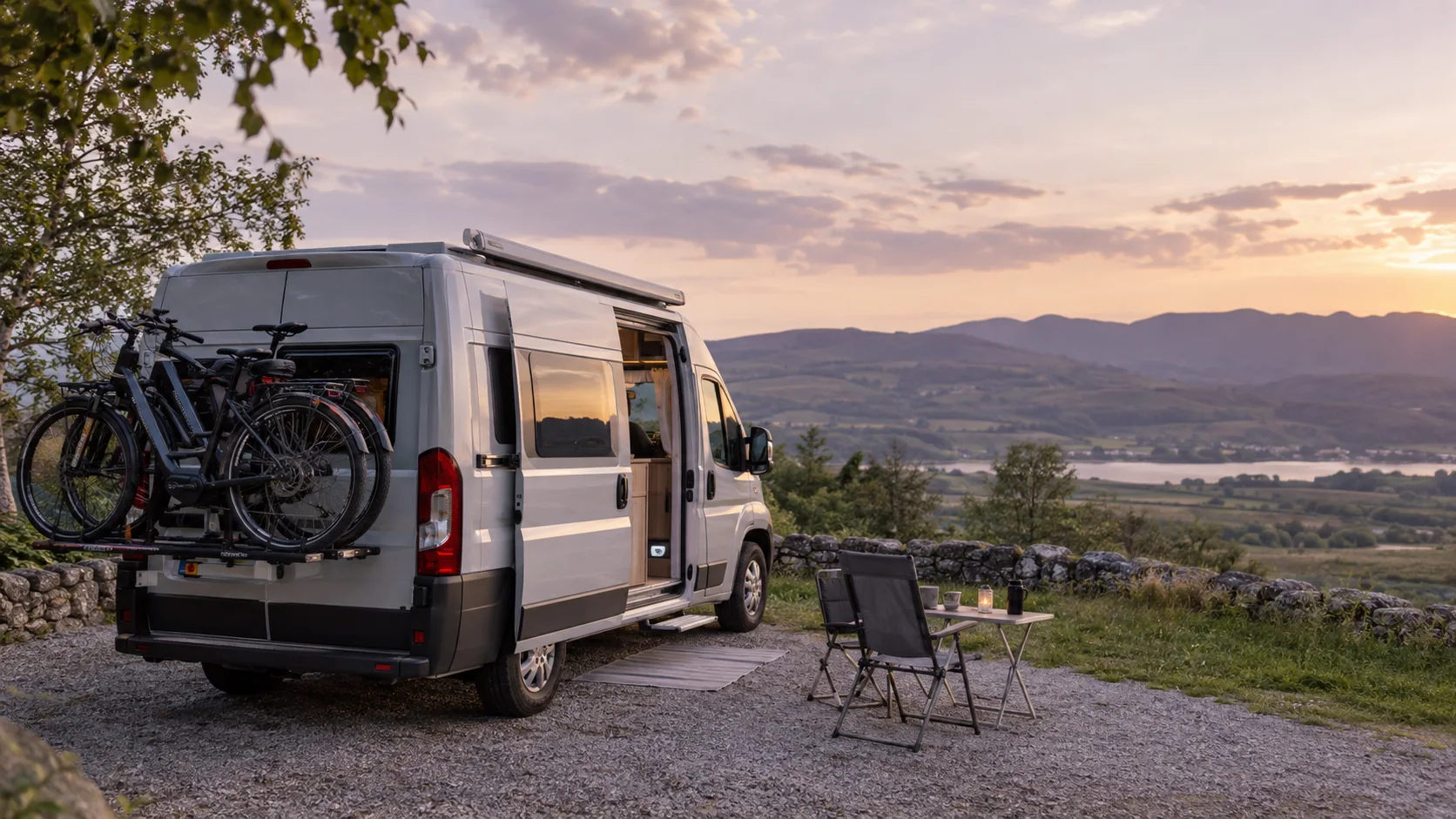
A retirement lifestyle choice
This project starts with a fairly simple idea: after years of working and planning, retirement should create room for choices that are about living rather than accumulating. For us, one of those choices was whether a camper van could become part of the life we wanted — more short breaks, more flexibility, easier travel around the UK and Europe, and the option to take the bikes with us.
It was never really about owning a shiny van. It was about whether this was a sensible, enjoyable use of time and resources in the next stage of life. That distinction matters. A camper van is our example, but the underlying question is familiar: does this choice genuinely fit the life we want, and what else changes if we make it?
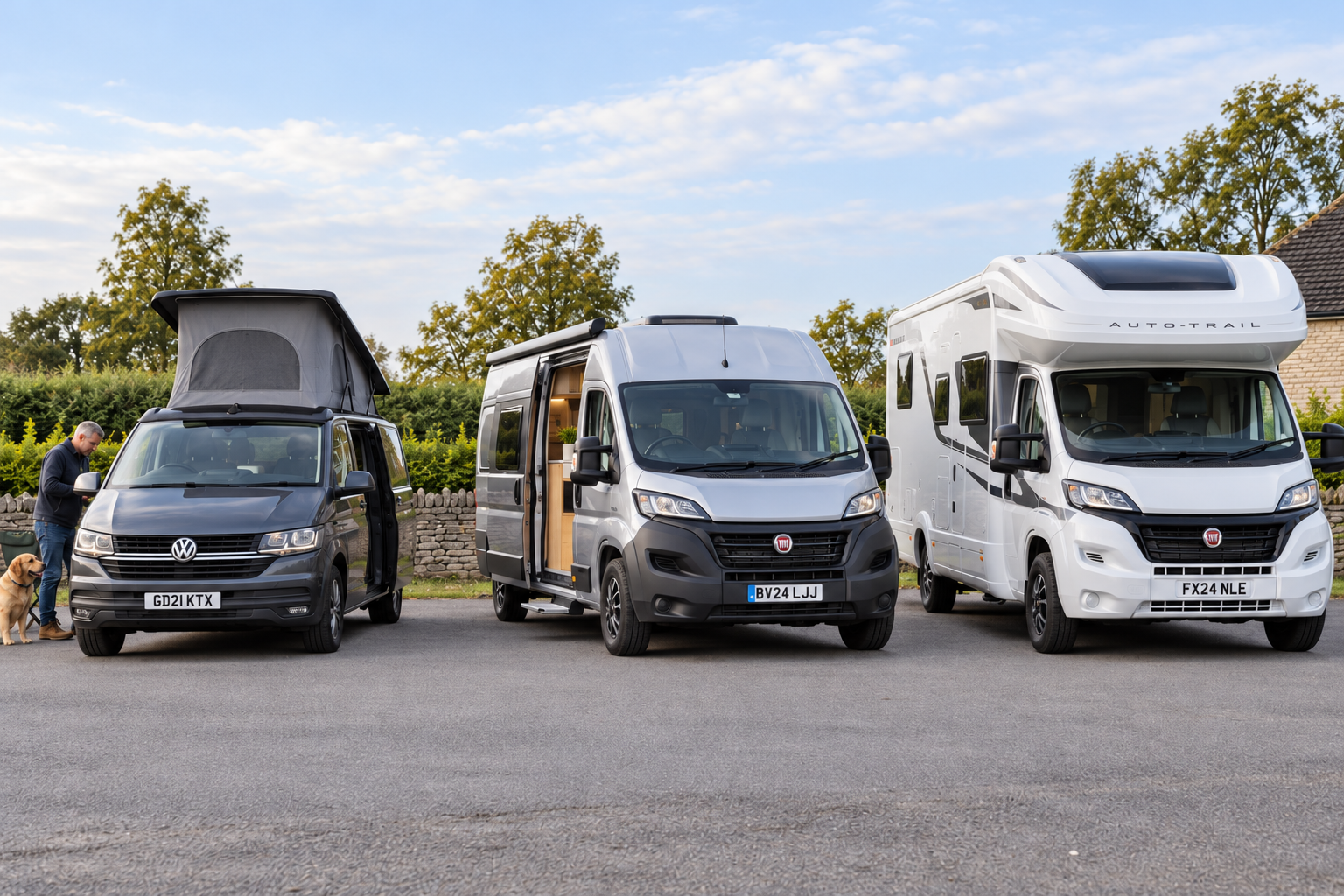
The original picture in our heads was a compact VW-style camper. It sounded right on paper: manageable size, easy to drive, easy to store and still capable of opening up a different kind of travel.
Then some friends very kindly lent us their camper for a week. That was probably the most useful thing that could have happened, because it let us experience the idea before we bought into it.
The van itself did exactly what it was designed to do and gave us a genuine taste of camper travel. What the week taught us was that, for the longer trips and future travel options we had in mind, that particular style of layout was not quite the best fit for us as a couple. We found ourselves wanting a little less daily reconfiguration and a little more permanent living space. The pop-top was useful, but it didn't solve the things that mattered most to us.
That changed the question. Instead of asking which compact camper we should buy, we began asking what the smallest vehicle was that could still give us fixed seating, a fixed bed, a usable kitchen, proper storage and enough room to live comfortably without turning every stop into a furniture exercise.
That is where the 5.4 metre van conversion started to emerge as an interesting middle ground. At one end sat the true compact camper. At the other sat the larger motorhome. In between was something that might give us more usable space without becoming too large for the driveway or too intimidating for both of us to drive.
From trial to requirements
Once the type of vehicle changed, the requirements became much clearer. We expect to use serviced campsites most of the time, with occasional off-grid stops. We want to travel mainly from spring to autumn, across the UK and Ireland and on longer trips into Europe. We need four belted travel seats when required, room for two e-bikes, an awning or outdoor living setup, sensible storage, and a vehicle that still feels manageable on ordinary roads and on our driveway.
That made the shortlist useful, but only as a set of questions. Models such as the Laika Ecovip Evoluzione, Swift Merlin 112, Dethleffs Active 540 DS and Pilote 540 have all helped us understand what is possible. None can be chosen properly from photographs or specifications. A layout that looks perfect online may reveal one awkward cupboard, one badly placed seat or one access problem that would annoy you every morning.
So the next stage is physical dealer visits. We want to sit in them, move around them, try the bed, test the storage, imagine a wet day inside, think about where the bikes go, and answer the much less glamorous question of whether both of us will actually be happy driving and parking the thing.
Practical fit and wider choices
The financial side still matters. New versus demonstrator value, depreciation, diesel costs, possible future diesel restrictions and the eventual resale position all belong in the decision. But rather than let those questions take over this project, we push them into the Living Decision Planner, where the consequences can be seen alongside the rest of life.
That means the camper project can stay focused on practical fit, while the life model asks the wider questions: what does the purchase do to cash reserves, flexibility, later spending, downside resilience and other choices? The van should first earn its place in the life we want; then the model can test whether paying for it still leaves the wider plan comfortable.
Where practical fit meets life planning → Living Decision Planner
And then there is Mable…
At least, that is the disciplined version of events.
In parallel, Yvonne appears to have moved rather further ahead in the decision process. The van already has a name — Mable — despite the inconvenient detail that we do not actually own one yet. Small bits and pieces are already being acquired for it, and a three-week trip to Austria is beginning to take shape.
So while the formal process says dealer visits, comparison and final decision, the household evidence suggests the purchase may already have passed a rather important human approval gate.
That is probably a better place to leave the story for now. The project is still live. We have not chosen the van, but we have already learned the most important lesson: trying the idea changed the brief, and the better brief changed the decision.
What someone else can take from it
Before a major commitment, try the part of the idea most likely to matter in everyday use. Let reality change the brief. Separate practical suitability from the financing decision, and then test the wider consequences before committing.
The same method works well beyond camper vans. It could be a car, a move, a renovation, a holiday, reducing work or almost any life choice where the attractive version in your head needs to survive contact with ordinary life.
Human + AI
| Human | AI | Collaboration |
|---|---|---|
| Lived trial · preferences · driving confidence · space judgement · final responsibility | Structure requirements · compare options · surface trade-offs · prepare visit questions · retain context | Use reality to revise the brief, then carry the revised brief into the next decision |