
The garden we wanted
Moving into a new-build house gave us the chance to create the garden from scratch. We did not want simply to look at an attractive space through the window. We wanted somewhere to enjoy the sun, spend time with family and friends, cook outdoors, have BBQs and pizzas, and sit beside the firepit as the evening drew in. A contemporary garden, yes — but one softened by planting, welcoming to wildlife, relatively low-maintenance and, above all, somewhere we would actually use.
There was one complication: the starting point was closer to a building site than a finished garden. The ground sloped towards the house, drainage was poor, and the levels and garage walls constrained what we could do. The vision was enjoyable; the route to it was decidedly less glamorous.
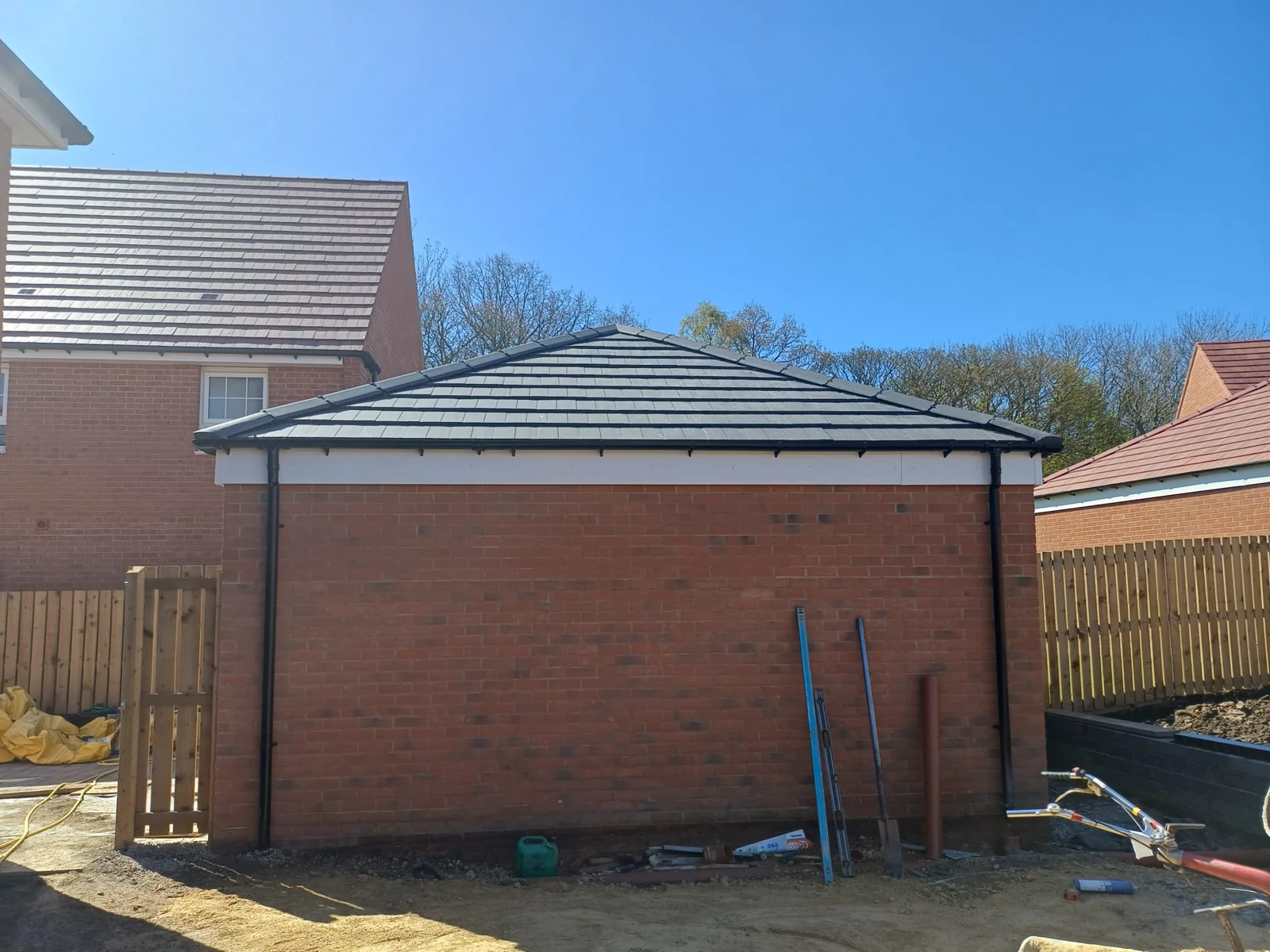
Make the site work before making it beautiful
Our first conversations with AI were about the practical problem: the slope, where the water would go, drainage, retaining, terracing and the relationship with the garage walls. We were not looking for AI to certify the engineering. We wanted to be better prepared to question the options and understand the answers given by people who would do the physical work.
That thinking helped us create a clearer initial landscaper brief. We looked for credible contractors, prepared common questions and tried to make the quotations comparable rather than judge a collection of different proposals on appearance alone.
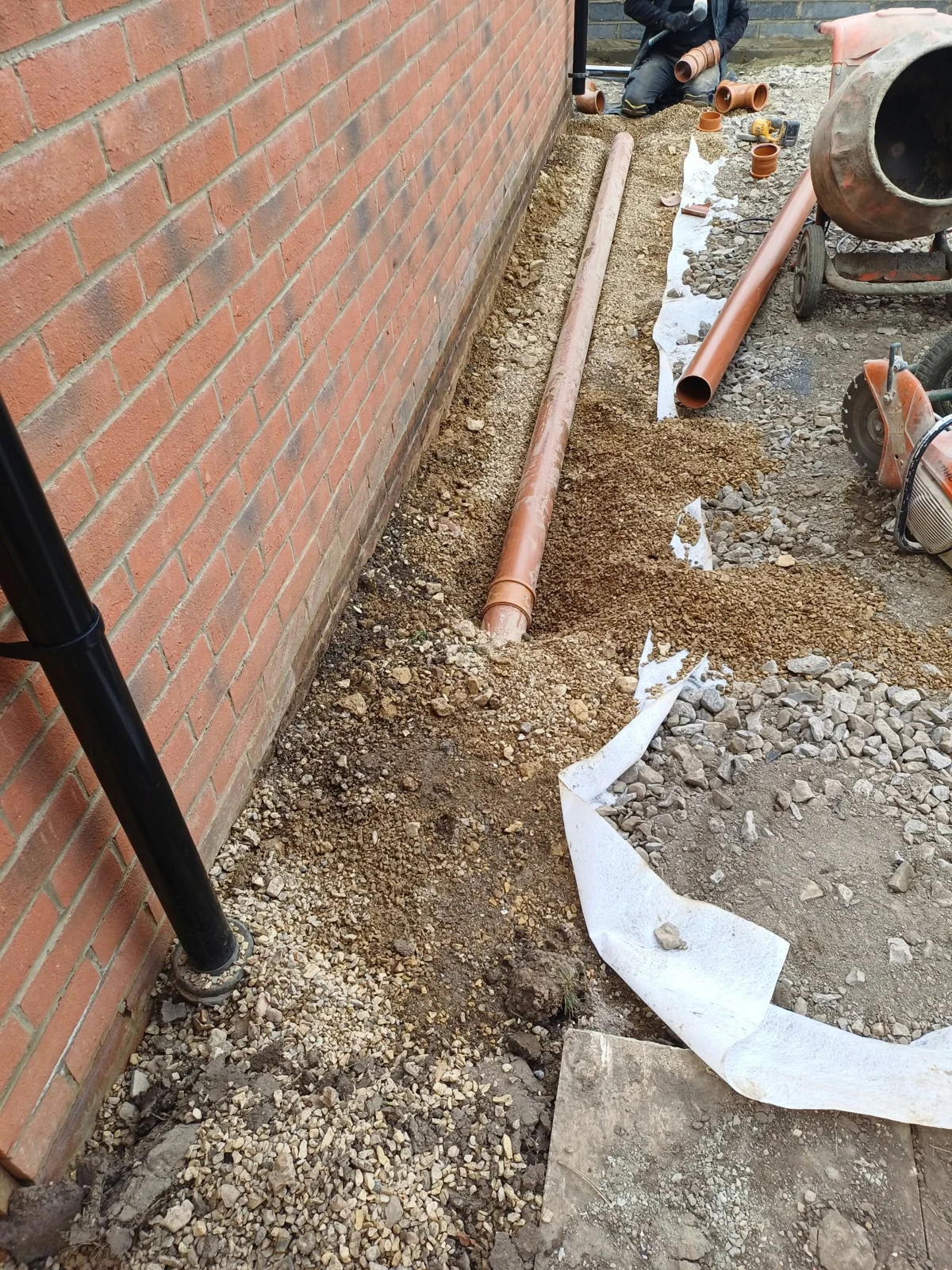
From practical brief to creative possibilities
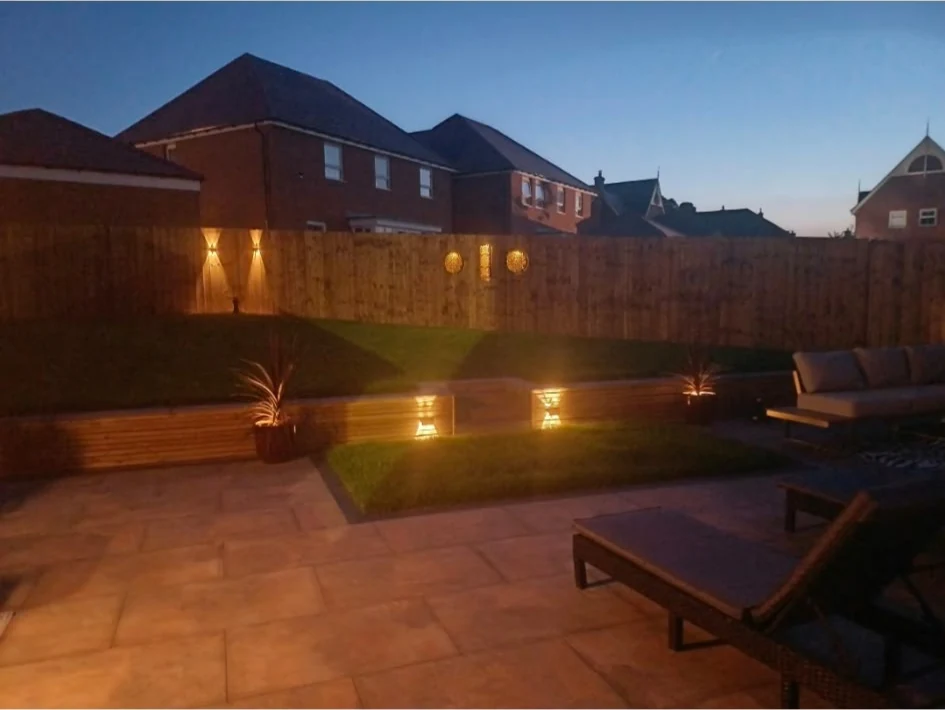
Once the essential constraints were understood, the conversation moved from Plan and Decide towards Create. How could the harder edges be softened? Could the seating feel more sheltered? How would the garden work by day and after dark? Planting, materials and lighting became things we could visualise and debate, rather than just try to imagine from descriptions.
The AI-generated images helped us explore alternatives quickly: more planting, less formality, different lighting, a different treatment for a difficult corner. They were visual suggestions, not contractor drawings or evidence of what had been built. The final design still had to survive the realities of available materials, skilled trades, weather, sequencing and changing judgements on site.
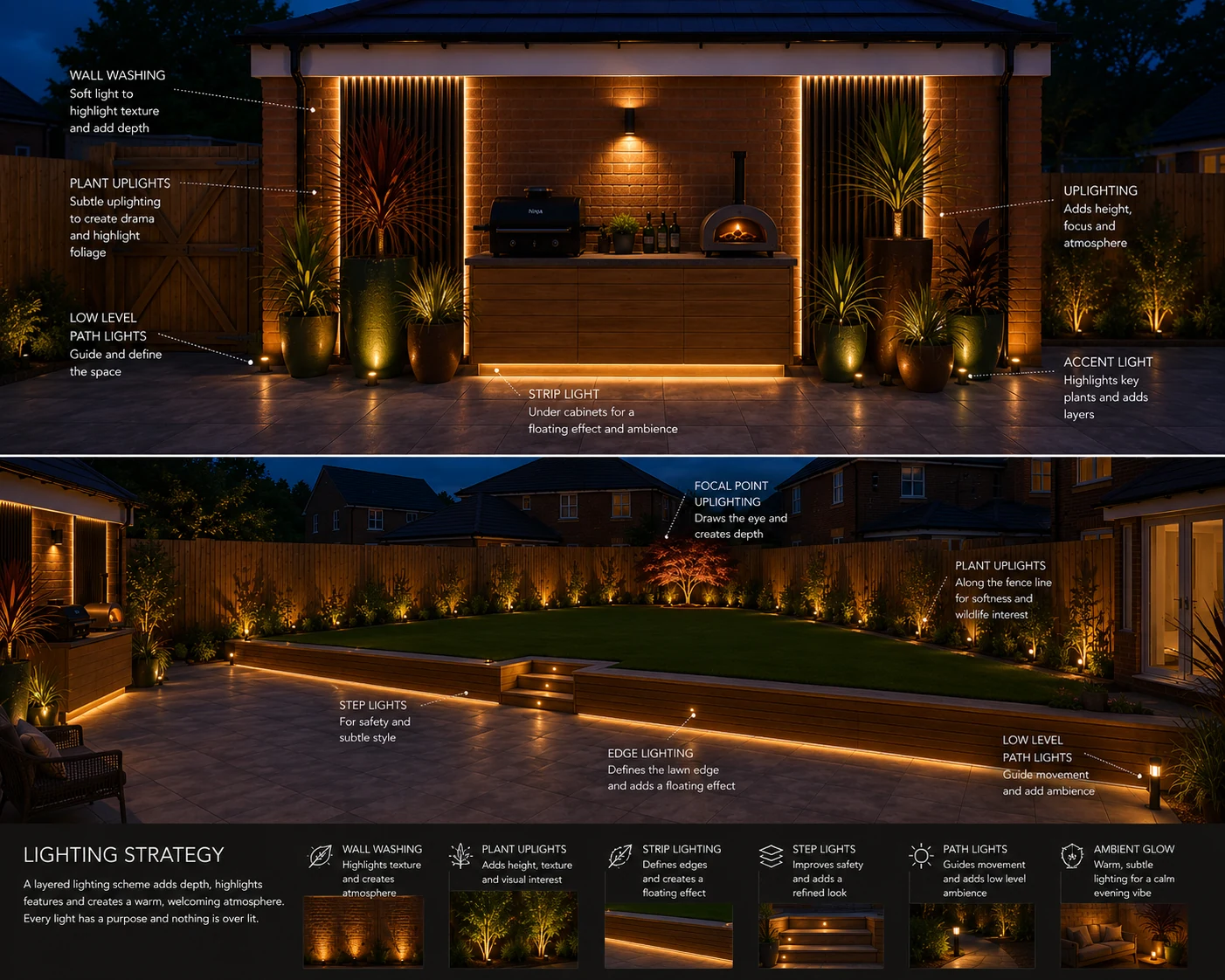
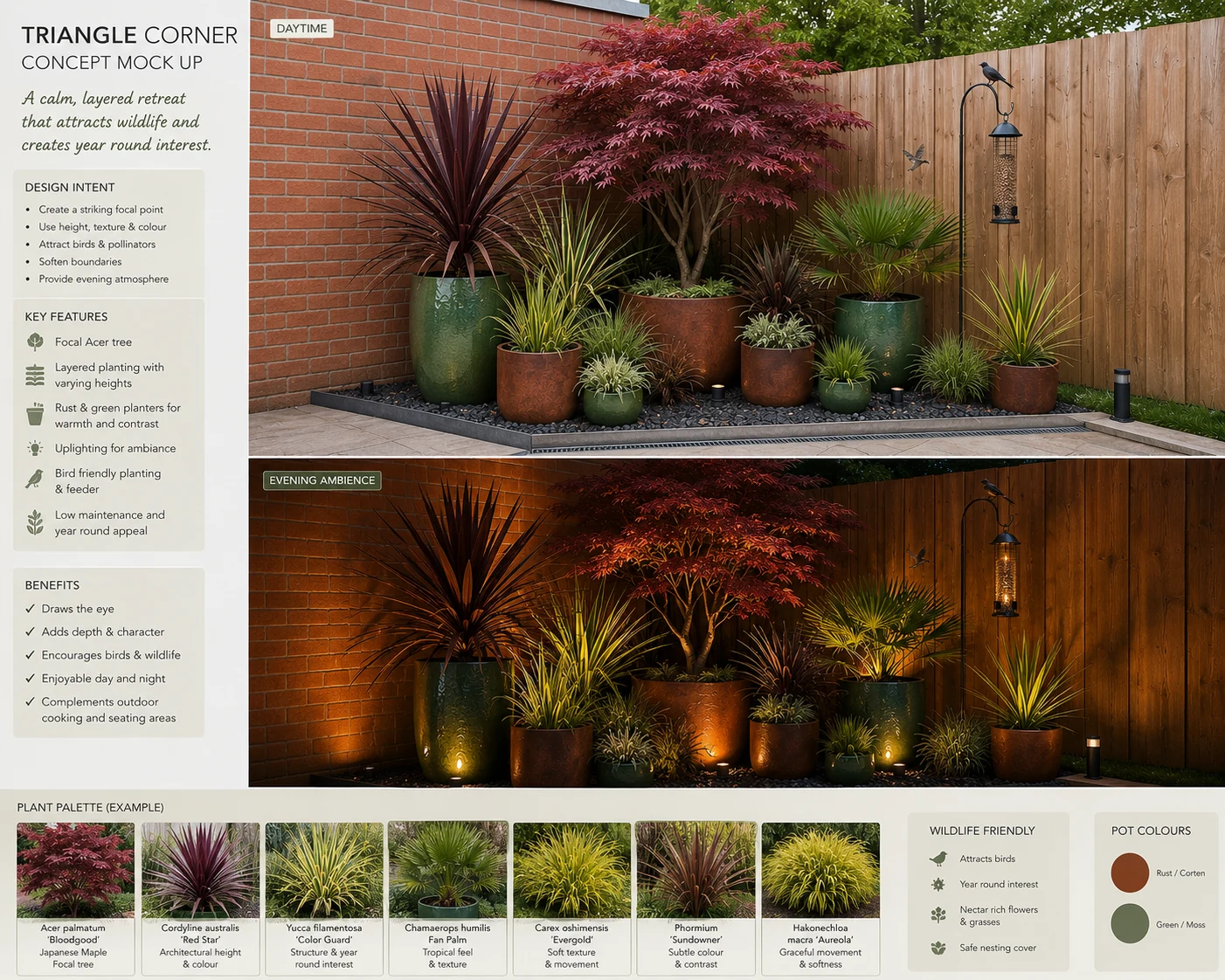
What we imagined — and what we actually got
The landscapers brought the practical skills and on-site decisions that a conversation and a generated image could not provide. Some ideas were adapted; others disappeared; some improved. AI helped us articulate what we wanted and assess possibilities, but it could not dig the drains, judge the ground underfoot or wield a spade. The humans involved — us and the tradespeople — had to make the real decisions.
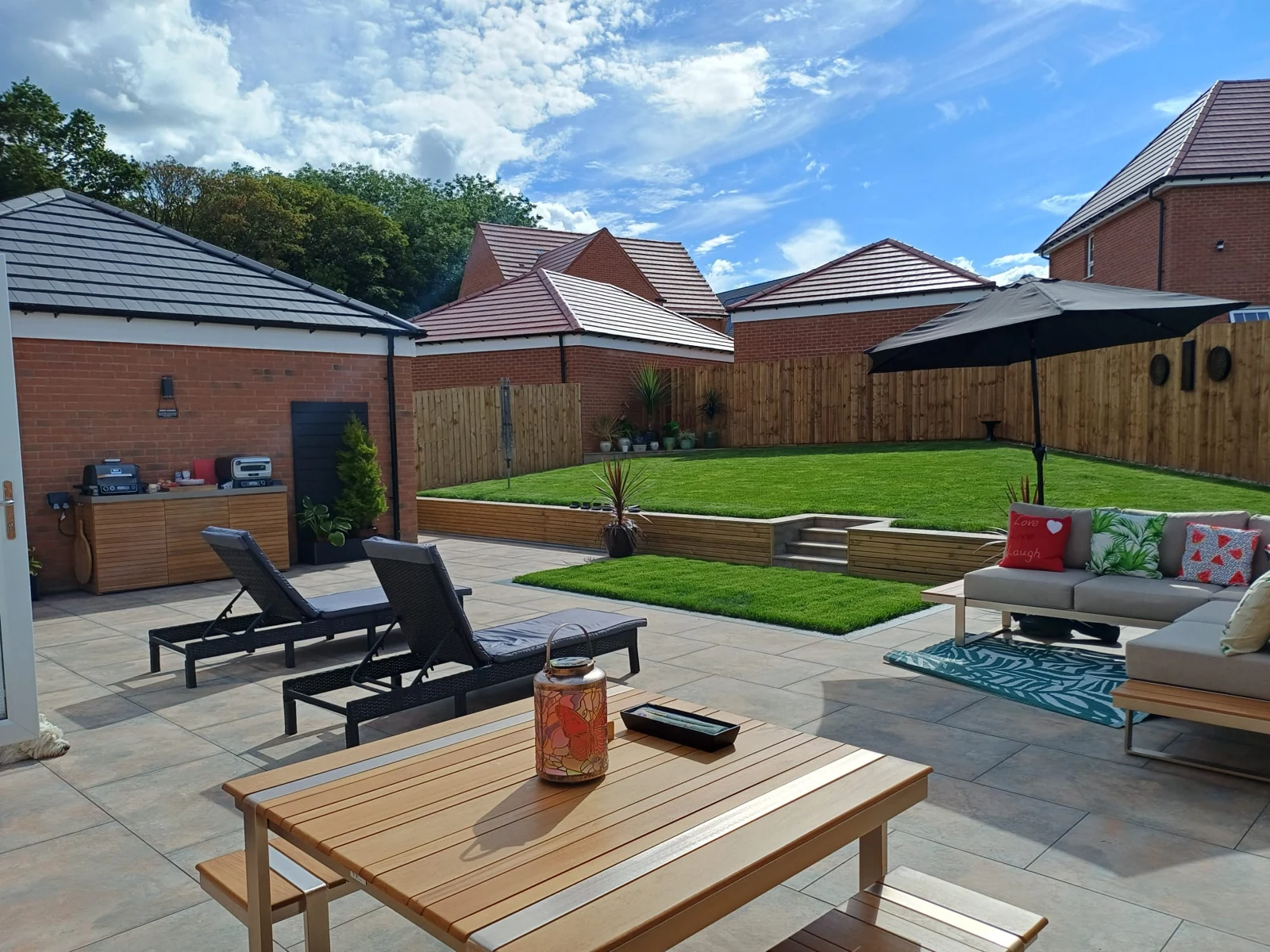
The existing Garden account estimates that roughly 65–70% of the AI visual direction made it into the finished garden. That is a useful, credible result, not a claim that a generated picture became reality. The other 30–35% reflects the compromises and improvements that appear when an imagined design meets a real site.
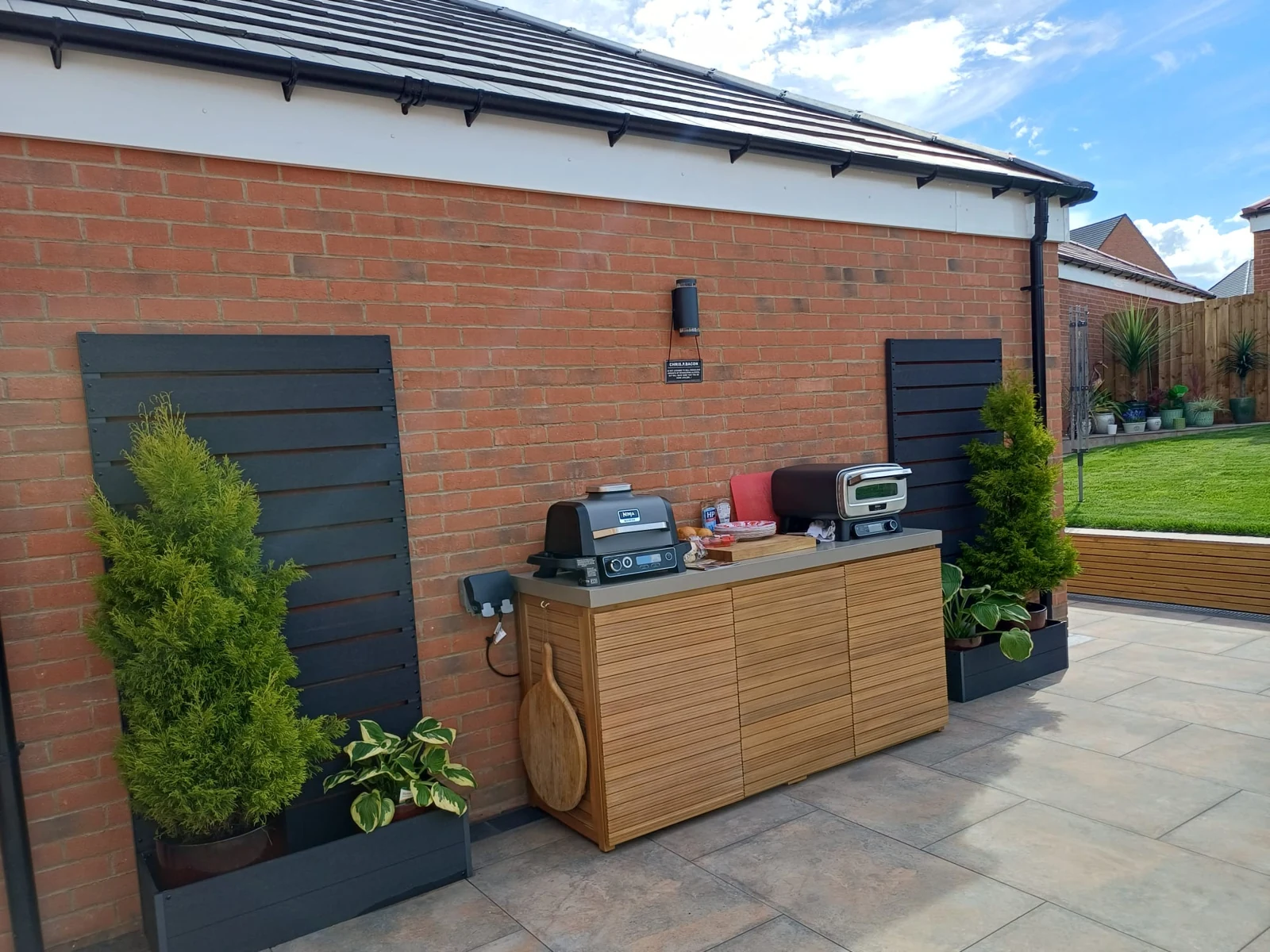
The actual outcome is more important than a percentage: the drainage and levels were addressed, the spaces were formed, and the planting, seating, outdoor kitchen and lighting created a garden with a reason to be used. We can now enjoy the kind of outdoor life we set out to make possible, rather than simply admire a landscaping project that has reached practical completion.
What each of us contributed
| Human contribution | AI contribution |
|---|---|
| Purpose: the kind of outdoor life we wanted, our tastes and priorities. | Structure: turn site constraints and aspirations into a practical brief. |
| Judgement: contractor choice, trade-offs, interpretation of quotes and acceptance of the work. | Comparison: help organise questions, options and responses. |
| Real-world execution: landscapers’ expertise, construction, planting and finishing. | Creative exploration: images and alternatives to discuss and critique. |
| Ownership: decide what felt right and whether the delivered garden met our aims. | Continuity: connect problem, design intention and eventual lessons. |
What is transferable?
You do not need a perfect technical specification or specialist AI skills to begin. Start by describing what you want a space to do for you, then work backwards through the constraints that stand in the way. Use AI to prepare questions, compare options and make ideas visible; ask experienced people to challenge the ideas against reality; keep the decisions and responsibility human.
The same pattern can serve a kitchen, home extension, event or any other project in which imagination has to meet budgets, materials, contractors and the physical world. The garden illustrates Plan → Decide → Create → Build — with iteration between them rather than a tidy one-way march.
The garden also connects naturally to our Living Decision Planner. It helped us weigh affordability against the lifestyle choices we wanted to make, so that creating a space to enjoy was part of a considered decision rather than simply a home improvement project.